

Every estate agent's business runs on one thing: a steady flow of people who want to buy or sell. Get that flow right and everything else, listings, commission, reputation, follows. Get it wrong and you spend your days waiting for the phone to ring. The agents who win in South Africa are not the ones chasing a clever hack. They are the ones running leads as a system: a handful of channels worked consistently, listings advertised properly, and every enquiry followed up fast. This is the complete playbook for doing exactly that, built for the South African market, and grounded in real data rather than slogans.
1. Leads are a system, not luck
The single biggest mindset shift that separates agents who thrive from agents who scrape by is this: lead generation is a process you run on purpose, not a stroke of luck you wait for. A good month is not the result of one viral post. It is the result of a dozen small, repeated actions, contacting your database, advertising your listings well, posting consistently, following up relentlessly, compounding over time.
That is good news, because a system can be learned and copied. You do not need to be a marketing genius or spend a fortune. You need to pick the right channels for your market, work them every week, and stop the leaks where leads slip through. This guide is organised exactly that way, foundation first, then how to win listings, how to advertise them, the channels that bring buyers and sellers to you, and finally how to convert the leads you generate instead of wasting them. It is deliberately more complete than the usual listicle, because half-doing ten things is how most agents stay stuck.
2. The pipeline maths that runs your year
Before tactics, get the numbers in your head. Leads are the top of a funnel: a fraction become appointments, a fraction of those become listings or signed buyers, and a fraction of those become a registered sale and a commission cheque. In South African real estate, a realistic lead-to-deal conversion sits somewhere around 2% to 12% depending on lead quality and your market. When you know your own ratios, lead generation stops being mysterious and becomes arithmetic, you simply work backwards from the income you want.
100×
more likely to reach a lead at 5 minutes vs 30 minutes (MIT/InsideSales)
~96%
of South African internet users are on WhatsApp (DataReportal 2025)
66%
of sellers choose their agent via referral or a past relationship (NAR)
Almost every buyer now starts online, the United States' National Association of Realtors reports that essentially 100% of buyers use the internet during their home search, and the South African market mirrors that behaviour. So your listings and your online presence are doing the first selling long before you ever speak to anyone. Keep the three numbers above in mind as you read: speed of response, the channel South Africans actually open, and where most business really comes from. They shape everything below.
3. Build the foundation before you chase leads
Generating leads before your basics are in place is like pouring water into a bucket full of holes. Three foundations come first, and the first one is the law.
Get legal: your PPRA Fidelity Fund Certificate
In South Africa you may not operate as an estate agent, or lawfully earn commission, without a valid Fidelity Fund Certificate (FFC) issued by the Property Practitioners Regulatory Authority (the PPRA). This is not a formality: under the Property Practitioners Act, a deal closed without a valid FFC can cost you the commission entirely. It renews annually, and you are expected to show that you are registered with the PPRA on your marketing. Make sure yours and your agency's are current before you spend a cent on lead generation, and treat it as a trust signal, because serious clients increasingly check.
Look like the professional you are
People refer and respond to agents who look credible. You do not need an expensive brand, but you do need a consistent one: a clear name and photo, a short line on what you do and where, the same headshot across every platform, and contact details that work. Buyers and sellers are trusting you with the biggest financial decision of their lives, a sloppy, inconsistent presence quietly costs you leads you never even hear about.
Claim your free shopfront: Google Business Profile
A free Google Business Profile is one of the most under-used lead sources for South African agents. When someone searches your name, or "estate agent in <suburb>", a complete profile with photos, your areas, and genuine reviews puts you on the map, literally. Set it up properly, keep it current, and ask happy clients to leave a review. We come back to reviews and local search in section 9.
4. Win more listings (where seller leads come from)
Listings are the lifeblood of the business, they are your inventory, your advertising, and your reputation all at once. In South Africa the prize is usually a sole (exclusive) mandate: the seller's commitment to you alone. Win more of those and the buyer leads partly take care of themselves, because every listing you advertise becomes a magnet (more on that in section 5). Here is where seller leads actually come from.

Mine the people who already know you
Your 'sphere of influence', past clients, friends, family, and everyone who already trusts you, is the highest-converting, lowest-cost lead source you have, and the data backs it up emphatically: NAR finds that around 66% of sellers choose their agent through a referral or a past relationship, and experienced agents earn the bulk of their business from repeat clients and referrals. Stay in genuine, regular contact (not just when you want something), make it easy and natural for people to refer you, and consider a referral thank-you. A simple rhythm of useful check-ins out-performs almost any paid channel.
Farm a neighbourhood until you own it
'Farming' means choosing one area and becoming the agent everyone there recognises. Pick a suburb you can realistically dominate, then show up consistently, local market updates, "Just Listed" and "Just Sold" posts, helpful area content, the occasional letterbox drop or branded calendar that stays on the fridge all year. Farming is slow to start and powerful once it compounds; the agents who own a suburb almost always got there by being relentlessly consistent for a year or two.
Go where sellers are already frustrated
Expired and withdrawn listings (homes that came off the market unsold) and for-sale-by-owner properties are warm seller leads by definition, these owners want to sell and the current approach is not working. Approach them with empathy and a genuinely better plan (often: better photography, a video tour, and a sharper advertising strategy), not a hard pitch. This is where being the agent with obviously superior marketing wins the instruction.
Win the listing presentation
A seller lead is only worth something if you convert it into a mandate. When you sit down with a prospective seller: find out whether they are speaking to other agents and prepare your differentiation; research them beforehand; make it a two-way conversation (sellers often choose on connection, not just credentials); show real reviews and a portfolio of sold homes; and discuss the price last, after you have proven you are the right agent. Then follow up, most agents do not, so it sets you apart.
| Method | Cost | Speed to results | Best for |
|---|---|---|---|
| Sphere of influence & referrals | Almost free | Fast (if your network is warm) | Every agent, especially newer ones |
| Farming a suburb | Low-medium | Slow, then compounding | Building a durable local brand |
| Just-listed / just-sold proof | Low | Medium | Turning each sale into the next listing |
| Expired / withdrawn & for-sale-by-owner | Low (time-heavy) | Medium | Agents with standout marketing to offer |
| Show houses / open days | Low | Fast | Capturing buyer and seller leads at once |
5. Advertise your listings to pull in buyer leads
A listing is not just a property for sale, it is your best advert. Every listing, marketed well, generates buyer enquiries (some of whom are also sellers), feeds your database, and proves to the next seller that you know how to sell. The goal is to make each listing work as hard as possible.

Master the portals: Property24 and Private Property
Property24 and Private Property are where the most active South African buyers search, so every listing belongs on both. Property24 is the larger by traffic, but you want presence on each. A portal listing only works as hard as you make it: the lead image is everything, it is the one frame competing for attention in a grid of dozens, so lead with your single strongest, brightest exterior or living shot. Write a description that sells a lifestyle and the specifics buyers actually search for, not just a spec sheet. Keep the price realistic. Include enough strong, varied photos to tell the whole story. If your photography is not pulling its weight, start with our guide on how to do real estate photography, great photos are the foundation everything else is built on.
Turn every listing into a lead magnet
The portals fill a specific listing, but the smart play is to use each listing to capture leads for your wider pipeline. A well-run show house is a room full of buyer and seller leads, collect details, follow up, and ask attendees what they are looking for. Clear, professional signage and boards advertise both the home and you to everyone who drives past. And every enquiry, whether or not it suits this property, goes into your database for the next one. The listing sells the house; the system you wrap around it builds your business.
6. Video and visual marketing: the unfair advantage
Photos get a listing noticed. Video gets it remembered, and it pre-qualifies serious buyers before they ever ask for a viewing, so you spend your time on real prospects. Listings with video consistently earn more enquiries and far longer engagement, surveys show most sellers prefer to list with an agent who markets with video, and on social media video is the format the algorithms actually push. Yet most agents still do not use it, because shooting and editing video is a separate skill with its own gear and hours of work. That gap is your advantage.
 Before · your photo
This is the gap RealTours was built to close. You upload the listing photos you already have, and you get a cinematic, narrated video tour back the same day, a landscape version for the portals and YouTube, and a portrait version made for WhatsApp and social, complete with a professional voice-over and music. No video gear, no editing suite, no extra shoot. You can see real tours here and check the pricing. For empty or tired-looking rooms, virtual staging furnishes the space digitally so it still shows like a home buyers want to move into.
The strategic point is bigger than any single listing: superior marketing is itself a listing-winning tool. When you walk into a seller's home and show them the cinematic tour you will create for their property, while the competing agent offers ten phone snaps, you win the mandate. Better marketing gets you the listing and sells the listing.
7. Social media and WhatsApp: where South Africa actually is
The portals reach people who are already searching. Social media and messaging reach people before they search, building the familiarity that makes you the agent they call when they are ready. In South Africa, that conversation happens overwhelmingly on a handful of platforms, and one of them is non-negotiable.
WhatsApp is your most important channel
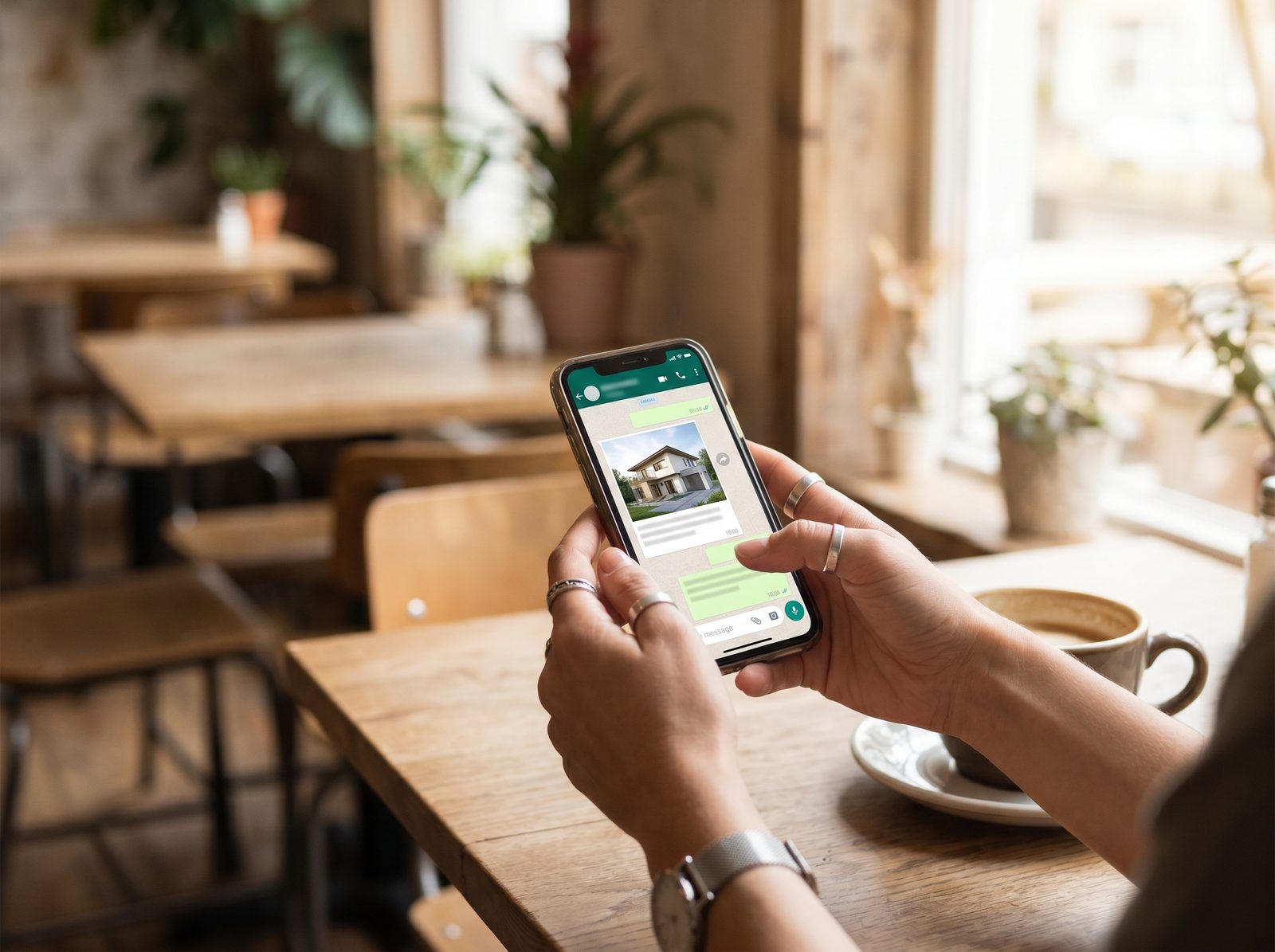
South Africans live on WhatsApp, around 96% of the country's internet users are on it, with near-universal open rates compared with email. Use WhatsApp Business for a professional profile, quick replies and a catalogue. Post listings and short portrait video tours to your WhatsApp Status, where your whole contact list sees them. Use broadcast lists (with consent, see section 11) to share new listings with interested buyers, and add a click-to-WhatsApp button to your ads and listings so an enquiry is one tap away. A 30-second portrait tour dropped into a buyer's WhatsApp does more than a long email they will never open.
Pick the social platforms you will actually keep up
You do not need to be everywhere. You need to be consistent somewhere. Facebook and Instagram are the workhorses for South African property, strong reach, easy video, active local buy-and-sell groups, and the same ad platform you will use for paid lead generation. TikTok and YouTube reward video walkthroughs and area guides. Choose one or two you can post to every week and commit, rather than spreading yourself thin across five you abandon.
What to post is simpler than agents fear. Mix new listings and video tours with "just sold" proof, short market updates, genuine area guides ("the best coffee in <suburb>"), client wins, and a little of your own face and personality, people follow and refer people, not logos. A reliable weekly rhythm beats sporadic bursts of brilliance every time.
8. Paid advertising that actually pays
Free channels should come first, but paid advertising lets you turn money into leads predictably once your system works. The two that matter for South African agents are Meta (Facebook and Instagram) and Google.

Meta lead-form ads suit property especially well: you can target a specific area and audience, set whatever budget you are comfortable with (you can test meaningfully from a few hundred rand a month), and let a strong video creative do the heavy lifting. A short cinematic tour as the ad creative dramatically out-performs a static photo, and carousel ads let you show several properties at once. Google ads, by contrast, capture people at the moment they search to buy or sell in a suburb, higher intent, usually higher cost per click. And retargeting, showing ads to people who already visited your listing or site but did not enquire, is some of the cheapest, most effective spend available, because you are reaching people who have already shown interest.
9. Content and local search: get found for free
Paid ads stop the moment you stop paying. Content and local search keep working long after you publish them, they are the compounding, free half of your lead engine.
Own your local search
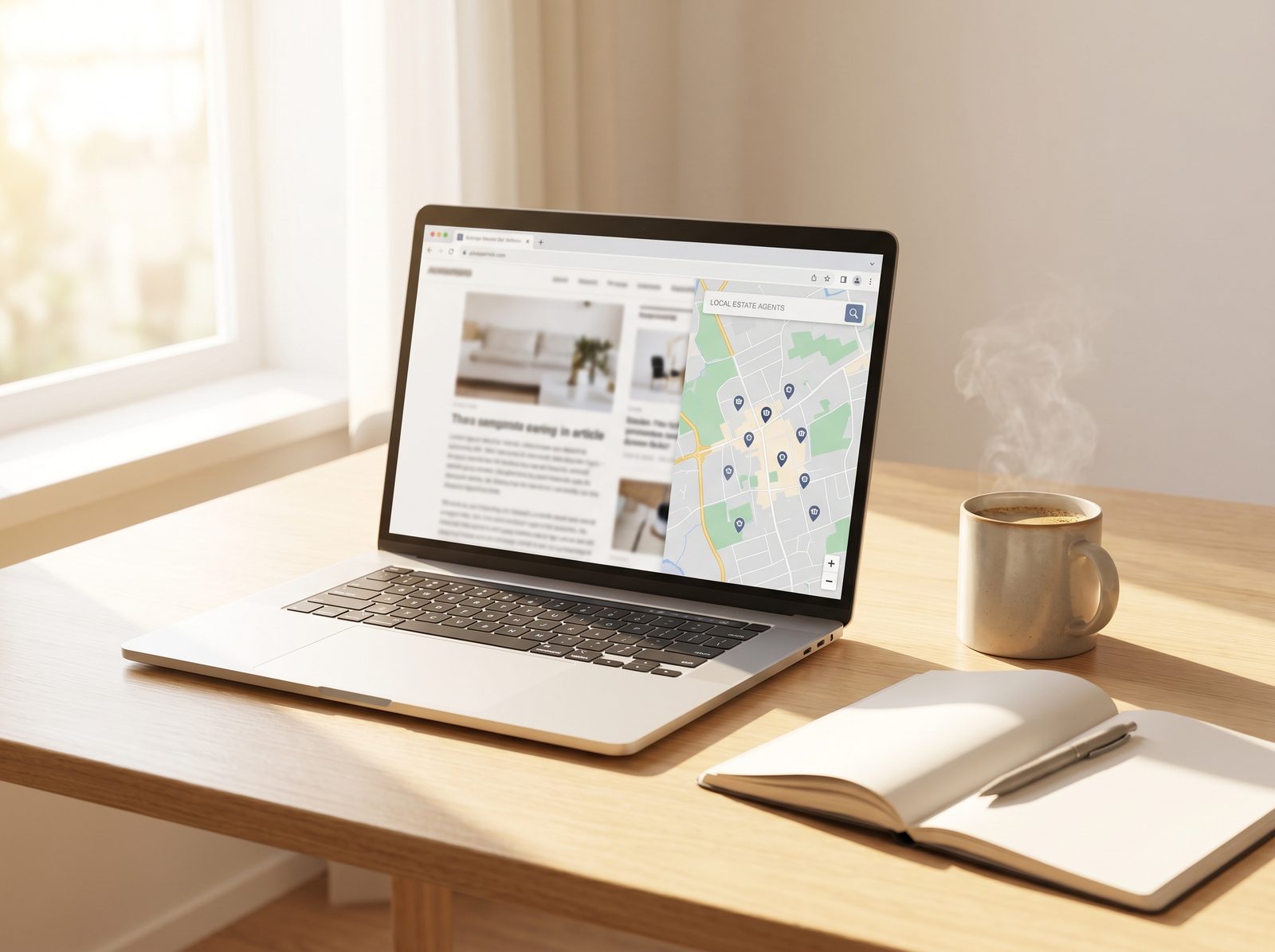
When someone searches "estate agent in <suburb>" or your name, you want to be the obvious, credible result. Your Google Business Profile (section 3) is the engine here: complete it fully, add photos, list your areas, and, most importantly, gather genuine reviews. Reviews are reputation you can prove. Make asking for a review a standard step after every successful deal, and respond to the ones you get. A steady stream of recent, real reviews quietly out-markets agents who have none.
Publish content that answers real questions
Helpful articles and area guides, "what's it like to live in <suburb>", "what does it cost to sell a home in South Africa", neighbourhood market updates, pull in exactly the people you want, and position you as the local expert. Offer a simple lead magnet (a free "selling your home" or "first-time buyer" guide) in exchange for an email to turn readers into contacts. This works on your own site, on social, and on LinkedIn. It is slower than ads, but every useful piece keeps earning. (This very guide is an example of the approach.)
10. Capture and convert: stop the leaks
Here is the uncomfortable truth that no competitor article tells you: most agents do not have a lead-generation problem, they have a lead-conversion problem. They generate enquiries and then lose them, to slow follow-up, to no follow-up, to a "system" that is a pile of sticky notes. Fixing the leaks is often faster and cheaper than generating more leads.

Speed wins: the five-minute rule
The single highest-leverage change most agents can make is to respond faster. A widely cited MIT / InsideSales study found you are about 100 times more likely to make contact with a lead if you respond within 5 minutes rather than 30, and Harvard Business Review found firms that respond within an hour are 7 times more likely to qualify the lead, yet many never respond at all. Since most agents take hours, simply being fast puts you ahead of the field. Set up instant notifications, and reply by call or WhatsApp the moment a lead lands.
Use a CRM, and actually follow up
A CRM does not need to be fancy, it needs to be used. Capture every lead, track where each one is, and run a deliberate follow-up cadence: several attempts across call, WhatsApp and email over the first week, then a long-term nurture for the ones who are not ready yet. Most people who enquire will not transact this month, but many will within the year, if you are still in gentle, useful contact when they are ready. The fortune, as the saying goes, is in the follow-up.
11. Stay on the right side of the rules
Generating leads in South Africa comes with rules worth respecting, not just to avoid trouble, but because the agents who handle people's data and trust well are the ones who build durable reputations.
- FFC first: you must hold a valid PPRA Fidelity Fund Certificate to operate and earn commission (section 3). Keep it current and reflect your PPRA registration on your marketing.
- POPIA (the Protection of Personal Information Act) governs how you collect, store and use people's personal information, including direct marketing. For electronic marketing to people you do not already have a relationship with, the safe approach is consent-first: make the first message a clear, honest request for permission, not a hard pitch.
- Always identify yourself, and always give an easy, respected way to opt out. Honour every opt-out immediately, and across your whole agency, not just your own contact.
- Personal cold-calling is treated differently from automated electronic marketing, but you must stop contacting someone the moment they ask you to.
- Keep records of consent, and never buy scraped or dodgy contact lists, they are both a legal risk and a reputational one.
None of this should scare you off marketing, it should shape it. Consent-first, honest, opt-out-friendly outreach is not only compliant, it converts better, because the people who stay on your list actually want to hear from you. (This is general guidance, not legal advice, when in doubt, check the PPRA and a POPIA specialist.)
12. Your weekly lead-generation rhythm
Strategy is worthless without a routine. The agents who generate leads consistently are not doing heroic things occasionally, they are doing ordinary things every single week. Here is a simple cadence to build your own around:
- Every day: respond to every new lead within minutes, and make your planned follow-up contacts. Speed first, always.
- Every week: reach out to a set number of people in your sphere and farm area, post to social and WhatsApp Status several times, and turn every new listing into a video tour and a portal-optimised advert.
- Every listing: order the lead image for the grid, create a cinematic tour, run a show house, and add every enquiry to your CRM.
- Every month: ask recent clients for reviews and referrals, send a useful market update to your database, and review your numbers against the pipeline maths in section 2.
- Every quarter: look at which channels actually produced leads and which produced sales, and put more time and money into what is working.
Leads in South African real estate are not won by luck or by chasing the latest trick. They are won by agents who look professional, win and advertise listings well, market on the channels their market actually uses, follow up faster than everyone else, and do it consistently. Build that system, and let your marketing, especially your video, do more of the selling for you, and you will not just keep up with the market. You will become the agent everyone else is competing against.
Sources & further reading
- NAR, Highlights from the Profile of Home Buyers and Sellers (buyers online; referral/repeat business)
- Lead Response Management (MIT / InsideSales), speed-to-lead study
- Harvard Business Review, The Short Life of Online Sales Leads
- DataReportal, Digital 2025: South Africa (WhatsApp & internet usage)
- Property Professional, 2023 changes to Property24 & Private Property for independent agents (Competition Commission)
- PPRA, Property Practitioners Regulatory Authority (Fidelity Fund Certificate)
- STBB, POPIA and cold-calling for property professionals
- RE/MAX SA, How to get leads as a real estate agent (SA conversion-rate range)