
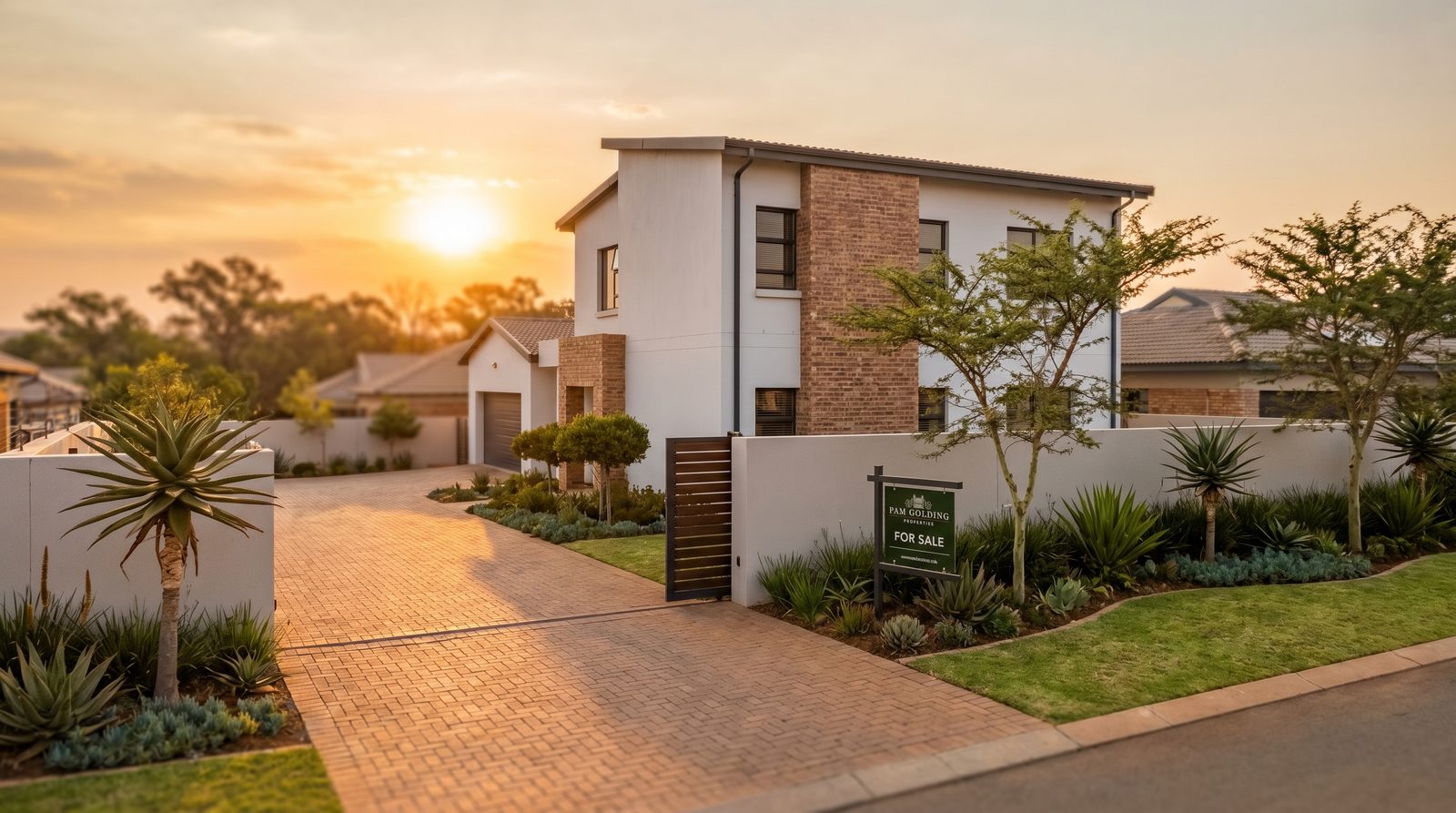
Every seller wants two things that sound like opposites: to sell quickly, and to sell for the best price. They are not opposites. In South Africa, the homes that sell fastest are almost always the ones that sell closest to asking, because the same things that pull buyers in quickly (a fair price, sharp presentation, smart marketing) are the things that protect your price. A home that sits, on the other hand, grows stale, attracts low offers, and ends up discounted. This is the complete 2026 playbook for selling your house faster in South Africa: what genuinely moves a sale, in the order that matters, with the local realities, load-shedding, compliance certificates, the transfer process and the costs, built in.
98%
of asking price achieved, on average, by homes that sell in their first 30 days*
+118%
more online views for listings that include a video tour*
~90%
of buyer enquiries now come from the major property portals*
*These are widely cited South African industry figures, treat them as directional rather than absolute. The pattern behind them is what counts, and it is remarkably consistent: speed and price move together. Get the home in front of the right buyers, looking its best, at the right number, in the first few weeks, and you win on both.
1. How long does it take to sell a house in South Africa?
Set your expectations correctly and you make calmer, faster decisions. There are really two clocks running. The first is time on the market, from listing to an accepted offer. The second is the transfer process, from accepted offer to the money landing in your account.
On the first clock, the national picture varies a lot by area, price band and market mood. A realistically priced, well-presented home usually attracts serious interest within its first two to three weeks. Average time on the market has ranged broadly, often in the region of 8 to 14 weeks, and has tightened to as little as around three weeks during hotter phases. The lesson is not the exact number; it is that your first few weeks are by far your most valuable. That is when your listing is newest, most visible, and shown to the buyers who have been waiting for exactly your home.
On the second clock, once you accept an offer, the conveyancing and Deeds Office registration typically add another 8 to 12 weeks for a bonded sale, and a little less for a cash sale. So from "for sale" to "sold and paid", a realistic total is around three to six months. Most of the transfer clock is out of your hands, but you can shave weeks off it by having your paperwork ready before you list (see section 9).
2. Why homes sit on the market
Before the tactics, the diagnosis. When a home does not sell, the cause is almost always one (or more) of four things, and all four are fixable:
- It is overpriced. This is the number one reason, every time. The market sets the price, not your asking number, and buyers browsing online compare you instantly against everything else in the suburb.
- It presents poorly. Cluttered, dark or amateur photos, an untidy home, deferred repairs and dated finishes all make buyers scroll past or walk away.
- The agent or mandate is wrong. A poorly chosen agent, or marketing spread thinly across too many open mandates, means weak, inconsistent effort.
- The marketing is thin. If the listing is not on the portals where buyers actually look, with a strong lead image and, increasingly, a video, it simply is not being seen.
A simple, honest signal to watch: if you are getting no viewings at all, the price is almost certainly too high or the presentation is letting you down. If you are getting viewings but no offers, the issue is usually price expectation or something specific buyers see in person. Listen to that feedback early, it is the cheapest market research you will ever get.
3. Price it right from day one
Pricing is the lever that decides everything else. Price correctly and good marketing compounds it; price too high and even brilliant photos cannot rescue you. The goal is not the highest number you can imagine, it is the number that creates competition among buyers in your first few weeks.
Base your price on a Comparative Market Analysis (CMA): what genuinely comparable homes in your area have actually sold for recently (not what they were listed at), adjusted for your home's condition, size and features. A good agent will prepare this for you using recent sold prices, transfer history, municipal valuations and current suburb trends. Resist the temptation to "test the market high and drop later", buyers can see how long you have been listed, and a string of small reductions reads as desperation.
4. Choose the right agent and mandate
Around nine in ten South African sales still go through an agent, and the right one earns their commission many times over in speed, price and a sale that does not collapse. Meet two or three in person. Ask for a recent sold-listing track record in your specific suburb (not just current listings), how they will market your home, and how they arrived at their suggested price. Be wary of the agent who simply quotes the highest number to win the mandate, that is how homes end up overpriced and stale.
Commission in South Africa is negotiable and typically runs between about 4% and 7% plus VAT. Cheaper is not automatically better, a slightly higher commission with an agent who markets properly and sells in three weeks beats a discount agent whose listing sits for six months. Then there is the mandate question, which directly affects how fast you sell:
| Sole mandate | Open mandate | |
|---|---|---|
| What it is | One agency has the exclusive right to sell for a set period (often ~90 days) | Several agencies market the home at the same time |
| Marketing effort | Higher, the agent invests in photos, video and portal spend knowing they will earn the sale | Diluted, no single agent wants to over-invest in a listing a rival might sell |
| Consistency | One price, one message, one point of contact | Pricing and presentation can vary between agencies and confuse buyers |
| Main risk | You are tied to one agency, so choose well and cap the period | Double-commission disputes; a 'race to the bottom' on price |
| Tends to be | Faster, cleaner, better-presented | Wider reach but messier; can actually slow a sale |
For most sellers, a sole mandate with a strong, proven agent, time-boxed to a defined period so you keep leverage, is the faster, less stressful route.
5. Prepare the property to show its best
Buyers do not buy houses; they buy the feeling of their future life in them. Preparation is about removing everything that gets in the way of that feeling. None of this is expensive, it is mostly time and discipline, and it has an outsized effect on both speed and price.
Declutter and depersonalise
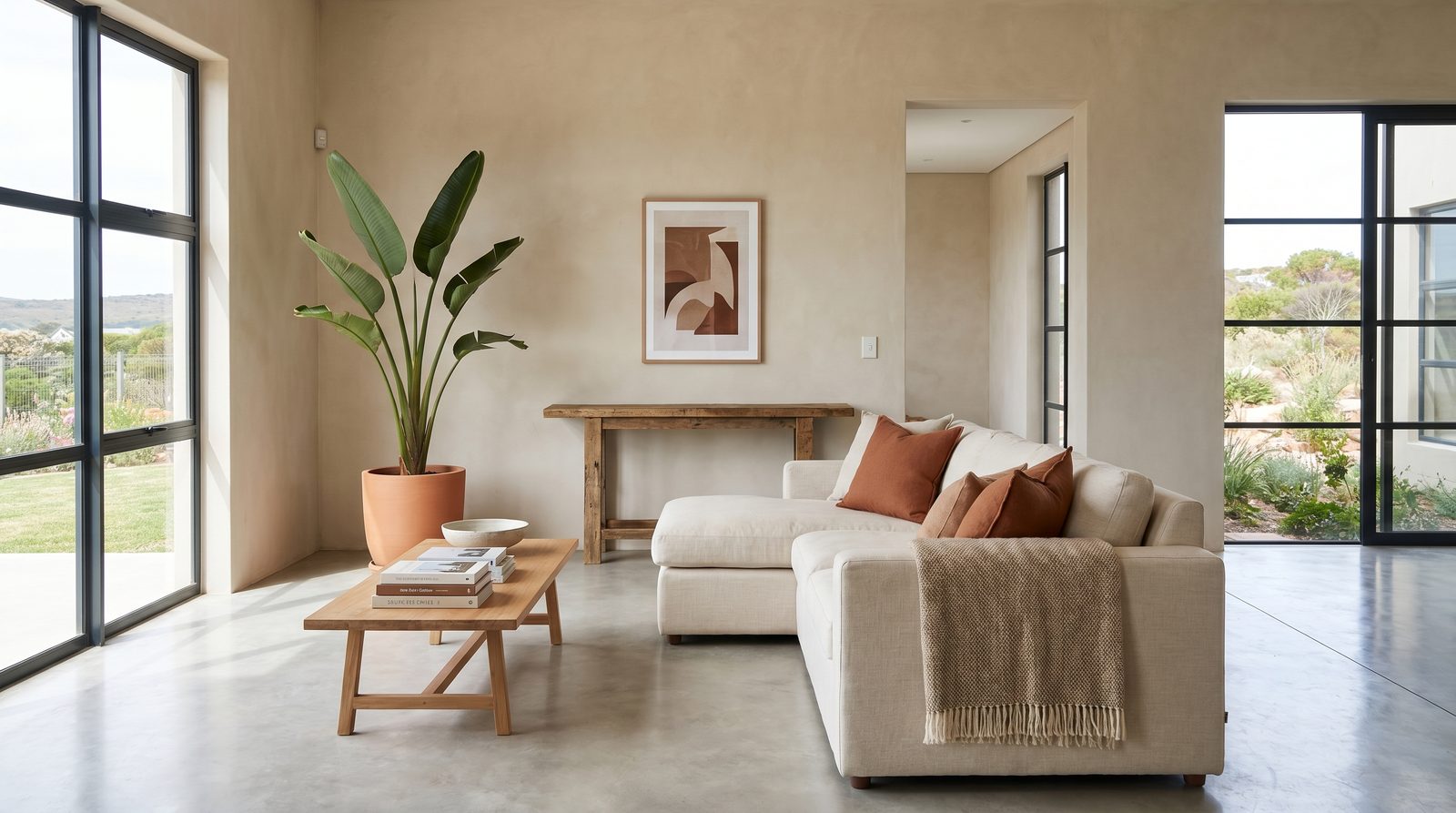
Clear surfaces, pack away anything you will not need before you move, and remove the deeply personal, family photos, fridge clutter, collections. The aim is a home that feels spacious, calm and ready to move into, not empty and not crammed. A home that looks bigger feels more valuable.
Fix the small stuff, then style
- Repair the obvious niggles: dripping taps, sticking doors, cracked tiles, chipped paint, a gate that screeches. Buyers mentally add up small faults into a big discount.
- Repaint in light, neutral tones where walls are tired or bold, neutral sells to the widest pool.
- Deep-clean everything, including windows (clean glass means brighter photos and viewings).
- Refresh the kerb appeal: cut the lawn, trim the edges, clean the driveway, add a potted plant or two at the entrance. The exterior is the first thing a buyer sees, online and in person.
- Let the light in: open curtains and blinds, and turn on every light for a warm, bright feel.
6. The presentation lever that sells fastest: photos, virtual staging and video
Here is the part most "sell your home" guides skip in a single line, and it is the part that, in 2026, decides how fast you sell. Because buyers now shortlist almost entirely online, your home's visual presentation is your single biggest controllable advantage. This is where banks and portals cannot help you and where most sellers leave the most on the table.
6.1 Listing photography that converts

Listings with professional photos attract dramatically more views, often cited at over 100% more, than those with dark, cluttered phone snaps. Your lead image is the whole ballgame: it is the one photo competing against every other home in the suburb grid, and it decides whether a buyer clicks at all. Lead with your strongest exterior or main living shot, keep verticals straight, shoot bright, and cover every room plus the outdoor areas. If you want the full step-by-step, read our companion guide on how to do real estate photography.
6.2 Virtual staging and AI photo enhancement
Empty rooms are a quiet sale-killer: they photograph cold, look smaller than they are, and give buyers nothing to connect with. Physical staging, renting furniture and styling a home, works, but it is slow and can cost tens of thousands of rand. Virtual staging solves the same problem digitally: an empty or dated room is furnished and styled in software after the shoot, so a vacant property still looks like a home buyers want to move into, at a fraction of the cost and turnaround.
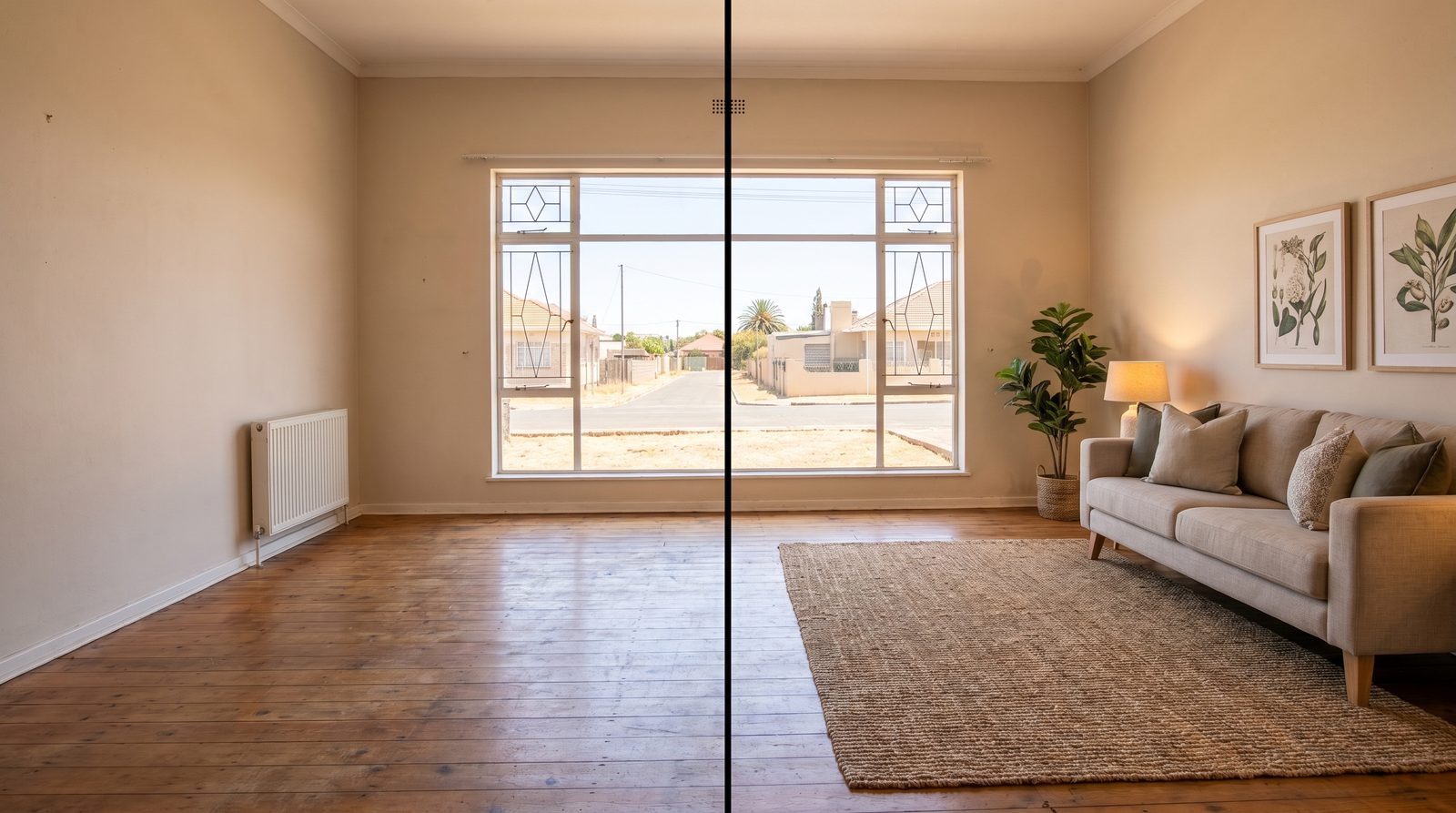
You can virtually stage and enhance your own photos with RealTours' Image Lab, brighten dim rooms, declutter, and furnish empty spaces, without booking a stylist or a second shoot.
6.3 Video tours, the unfair advantage
This is the lever almost nobody is using well, which is precisely why it works. Listings with a video tour earn far more views and longer engagement than photos alone, and the major portals surface them prominently. A video lets a buyer "walk" your home from their couch and pre-qualifies the serious ones before they ever request a viewing, so you spend your weekends showing the home to real prospects, not browsers.
A great South African listing video does not need a film crew. It needs smooth movement through the home's best spaces, a clear sense of flow and light, a few seconds on standout features (the view, the kitchen, the pool, the solar setup), and ideally both a landscape version for the portals and YouTube and a portrait version for WhatsApp and social. The catch has always been that shooting and editing video is a separate, time-consuming skill, which is exactly why most sellers and agents skip it.
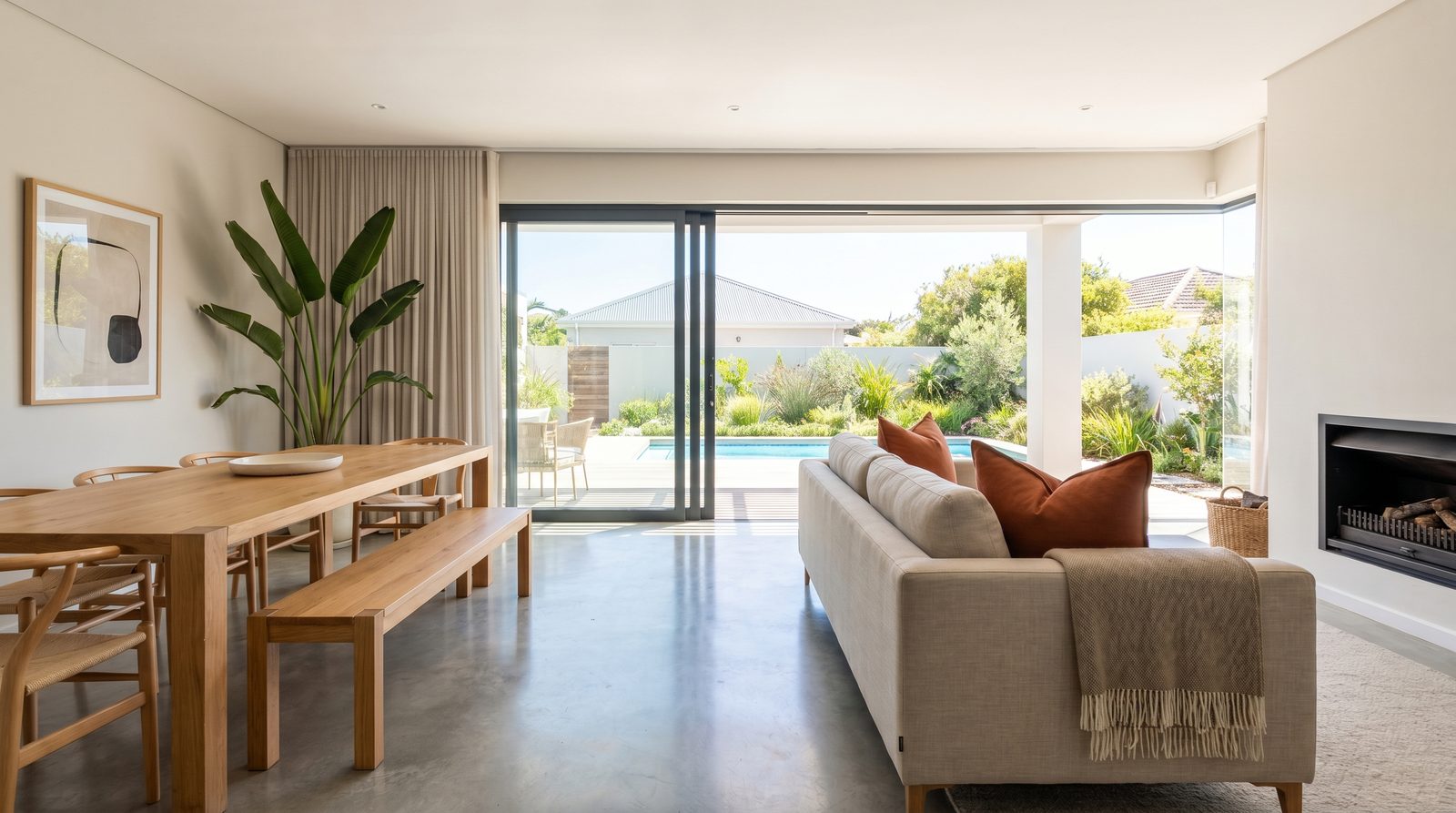 Before · your photo
This is the gap RealTours was built to close. You upload the listing photos you already have, and you get a cinematic, narrated video tour back the same day, a landscape cut for portals and a portrait cut for social, with a professional voice-over and music, no video gear and no editing. You can see real tours here, or submit a listing and have your tour today.
7. Win on the portals: Property24 and Private Property
Around 90% of buyer enquiries start on the major portals, so winning there is not optional. Listing is the easy part; standing out is the work:
- Lead image: choose your single strongest, brightest photo, it is the thumbnail that decides your click-through against every rival listing.
- Use the video field: a video badge on your listing draws the eye and signals a serious, well-marketed home. Many portals rank or highlight listings with video.
- Write a real description: a clear, benefit-led headline and body that names the suburb, the standout features and the lifestyle, not just a list of room counts. This is read by buyers and by search engines.
- Cover the search filters: get the price band, beds, baths, garages, erf size and key features right so you appear in the filtered searches buyers actually run.
- Refresh a stale listing: if it has gone quiet, do not just wait. A new lead image, a price adjustment into a new bracket, and adding a video can re-surface a listing to fresh eyes.
- Respond fast: portal leads go cold within hours. The seller or agent who replies first, with the video link ready, wins the viewing.
Amplify beyond the portals too, a portrait video tour shared on WhatsApp, Facebook Marketplace and Instagram reaches buyers (and their families abroad) who are not actively scrolling a portal that day.
8. Selling in the load-shedding era
This is uniquely South African, and in 2026 it is a genuine price-and-speed factor that the bank and portal guides ignore. Buyers now actively shortlist for energy and water resilience. If your home has any of it, it is no longer a quiet bonus, it is a headline selling point you should market hard.
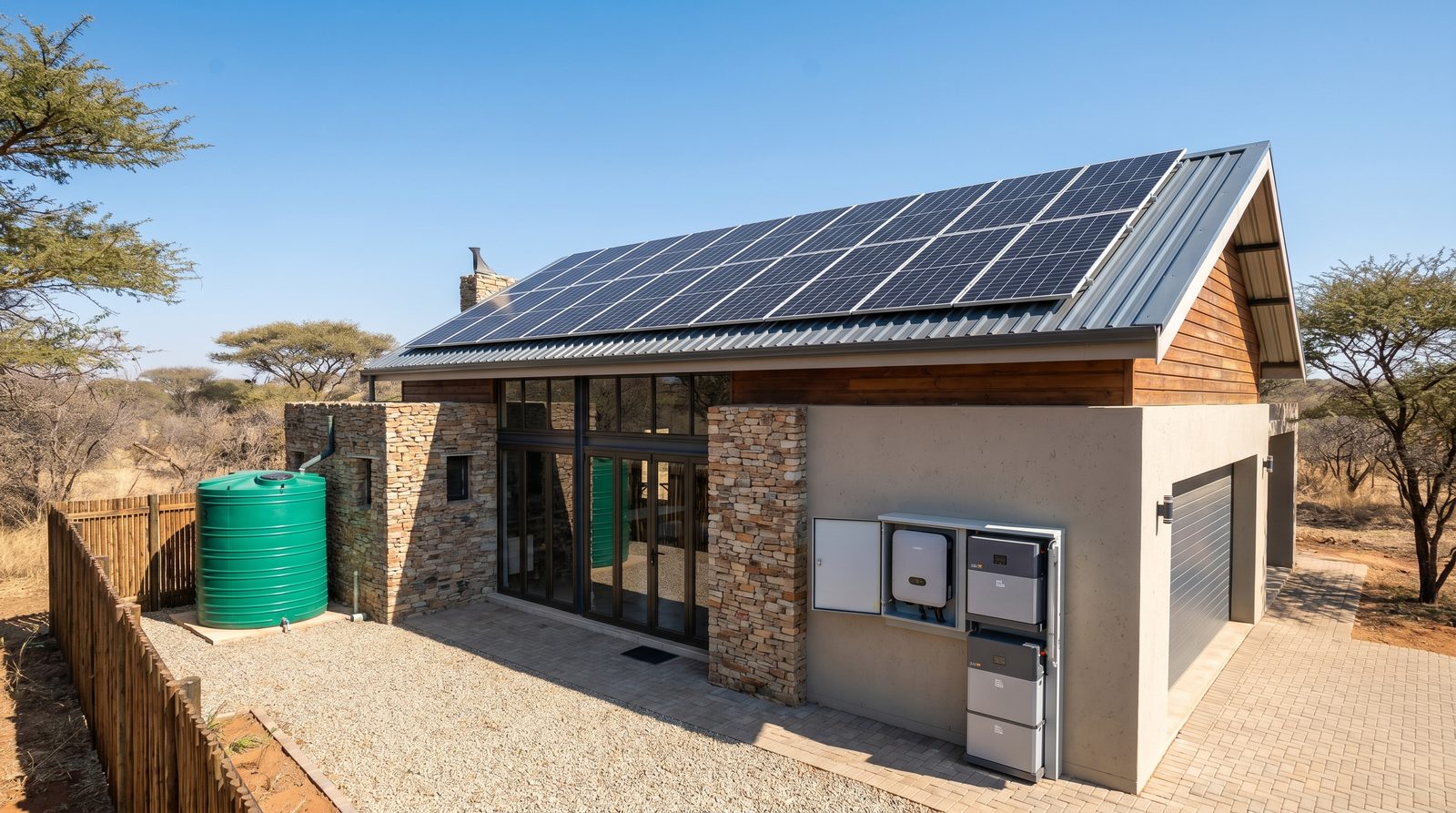
- Lead with resilience: solar panels, an inverter and battery, a gas hob or geyser, a borehole or JoJo water tanks, and fibre connectivity all belong in your headline and description, not buried at the bottom.
- Show it, do not just say it: feature the solar array, inverter and water backup in your photos and video tour, it is far more convincing seen than listed.
- Have the proof ready: keep invoices, specifications and warranties for solar and backup systems handy; serious buyers will ask.
- Register it: solar installations and boreholes generally need to be registered with your municipality. Doing this before you sell avoids a paperwork scramble that can delay transfer.
9. Get your paperwork ready before you list
Nothing kills momentum like a sale that stalls on missing documents. The fastest sellers get their paperwork in order before the home goes live, so that when an offer comes, transfer can move without delay. You will need your title deed, your FICA documents (ID and proof of address), rates and levy clearance figures, and your compliance certificates.
| Certificate | When it is needed | Indicative cost |
|---|---|---|
| Electrical Compliance (CoC) | Always required for transfer | ~R1,500, R3,000+ |
| Gas Certificate of Conformity | If there is any gas installation (hob, geyser, fireplace) | ~R800, R1,500 |
| Electric Fence System | If the property has an electric fence | ~R800, R1,500 |
| Plumbing / Water | Mandatory in the City of Cape Town; elsewhere on request | ~R1,000, R2,000 |
| Beetle (entomologist) | Customary in many coastal areas (KZN, Western Cape) | ~R1,000, R2,000 |
10. Offers, negotiation and the Offer to Purchase
When offers arrive, the highest number is not always the best deal, the fastest, most certain sale often is. Weigh each offer on more than price:

- Cash versus bonded: a cash buyer, or one with bond pre-approval in hand, is far more likely to close, and faster, than one still hoping to qualify. Buyers who are pre-approved sail through far more often than those applying after the fact.
- Suspensive conditions: most offers depend on the buyer getting a bond, or on selling their own home first. The more conditions, the more ways the deal can fall through.
- The Offer to Purchase (OTP) is a binding contract once signed: read every clause, confirm the occupation date, occupational rent and what is included (fixtures, appliances), and have your agent or conveyancer explain anything unclear before you sign.
11. The timeline and costs of selling
Once the OTP is signed, the transfer process begins. Knowing the rough sequence helps you keep it moving, and budget for it. A typical bonded sale runs something like this:
| Stage | What happens | Rough timing |
|---|---|---|
| Bond approval | Buyer's home loan is formally granted | 1, 3 weeks |
| Attorneys appointed | Transferring, bond and bond-cancellation attorneys instructed | Within days |
| Documents & compliance | Both parties sign; compliance certificates and clearance figures gathered | 2, 4 weeks |
| Lodgement | Documents lodged at the Deeds Office | 1 week |
| Registration | Deeds Office registers the transfer; you get paid | 1, 2 weeks after lodgement |
On costs, the headline split is simple: the buyer pays transfer duty and the transfer and bond attorney fees; the seller pays the estate agent's commission (the big one, 4% to 7% plus VAT), the bond cancellation costs on the existing home loan, the compliance certificates, and any rates or levies in advance to obtain a clearance certificate. Outside of commission, a seller's costs commonly land somewhere between roughly R15,000 and R50,000.
A quick, illustrative net-proceeds picture on a R2,000,000 home sold at 5% commission: commission of R100,000 plus VAT (R15,000) is R115,000; add roughly R5,000 in compliance certificates and around R5,000 in bond cancellation costs. That is about R125,000 in selling costs before any outstanding bond is settled from the proceeds, so you would net in the region of R1,875,000 less whatever remains on your home loan. And on tax: if this is your primary residence, the first R2 million of capital gain is excluded, so most ordinary home sales attract little or no Capital Gains Tax. Confirm your own position with a conveyancer or tax practitioner.
12. Sell faster with AI in 2026
The modern seller's toolkit is no longer just an agent and a portal. Used well, AI compresses the slow, expensive parts of selling into the same day, and it is the clearest edge a 2026 seller has over the field:
- Pricing insight: AI-assisted valuation tools and comparable-sales data help you sanity-check your agent's CMA and price with confidence from day one.
- Listing copy: AI can draft a sharp, benefit-led portal description and headline in seconds, then you edit it to sound like your home.
- Virtual staging: furnish empty rooms and brighten dim ones digitally, instead of renting furniture (see section 6.2).
- Video tours: turn the photos you already have into a cinematic, narrated video tour the same day, the single highest-impact, lowest-effort upgrade available to a seller right now.
None of this replaces a good agent or honest presentation, it amplifies them. The seller who prices right, presents well, and adds a video tour and virtually staged photos is simply playing a different game from the one whose listing is five dark phone snaps and a price that is "negotiable".
13. Your quick-sale checklist

Run through this before, and while, you sell:
- Price from a real CMA of recent sold prices, not hope. The first few weeks matter most.
- Choose a proven local agent; favour a time-boxed sole mandate over scattered open mandates.
- Declutter, depersonalise, fix the small stuff, repaint neutral, and lift the kerb appeal.
- Invest in strong photos with a killer lead image; virtually stage empty or dated rooms.
- Add a video tour, landscape for the portals, portrait for WhatsApp and social.
- List on Property24 and Private Property with the right filters, a real description and the video field used.
- Market your solar, inverter, water backup and gas as headline features.
- Get compliance certificates, FICA, title deed and clearance figures ready before you list.
- Weigh offers on certainty, not just price; understand the OTP and the 72-hour clause.
- Budget for commission, bond cancellation, certificates and clearance, and check your CGT position.
Ready to give your listing the presentation that sells? Submit your listing and get a cinematic video tour and virtually staged photos from the pictures you already have, today.