
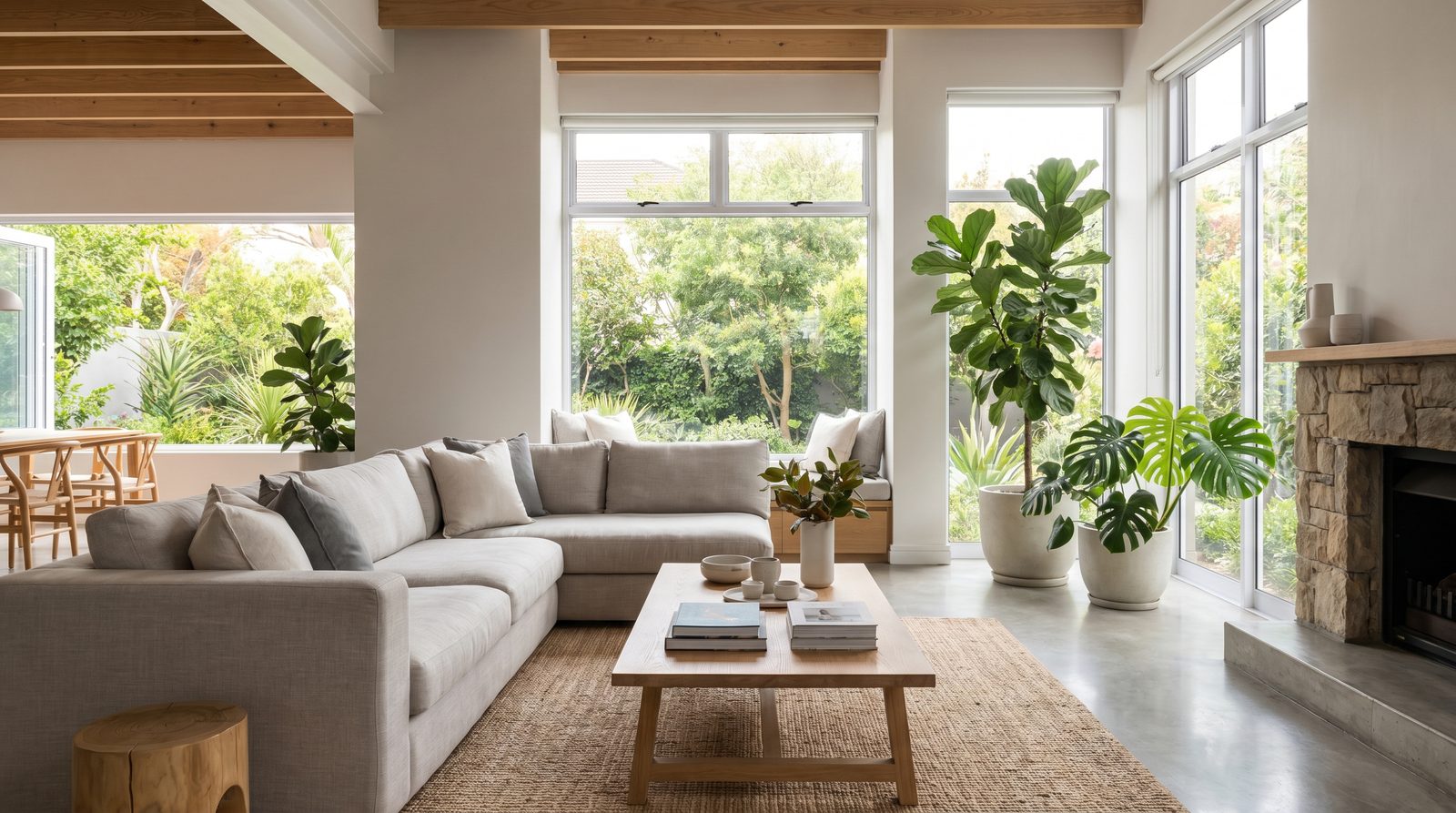
An empty room is hard to sell. It photographs cold, it reads smaller than it is, and it gives a buyer scrolling Property24 nothing to fall in love with. Physical staging fixes that, but in South Africa it is slow and can cost tens of thousands of rand. Virtual staging solves both problems: you furnish the room digitally after the shoot, for a fraction of the cost, in a day. Done well, it is one of the highest-return tools in property marketing. Done carelessly, or dishonestly, it can mislead a buyer and put you on the wrong side of the rules every South African agent works under. This guide covers all of it: what virtual staging is, what it costs in rands, the disclosure line you must not cross, and how to do it so it actually sells.
1. What virtual staging actually is, and what it isn't
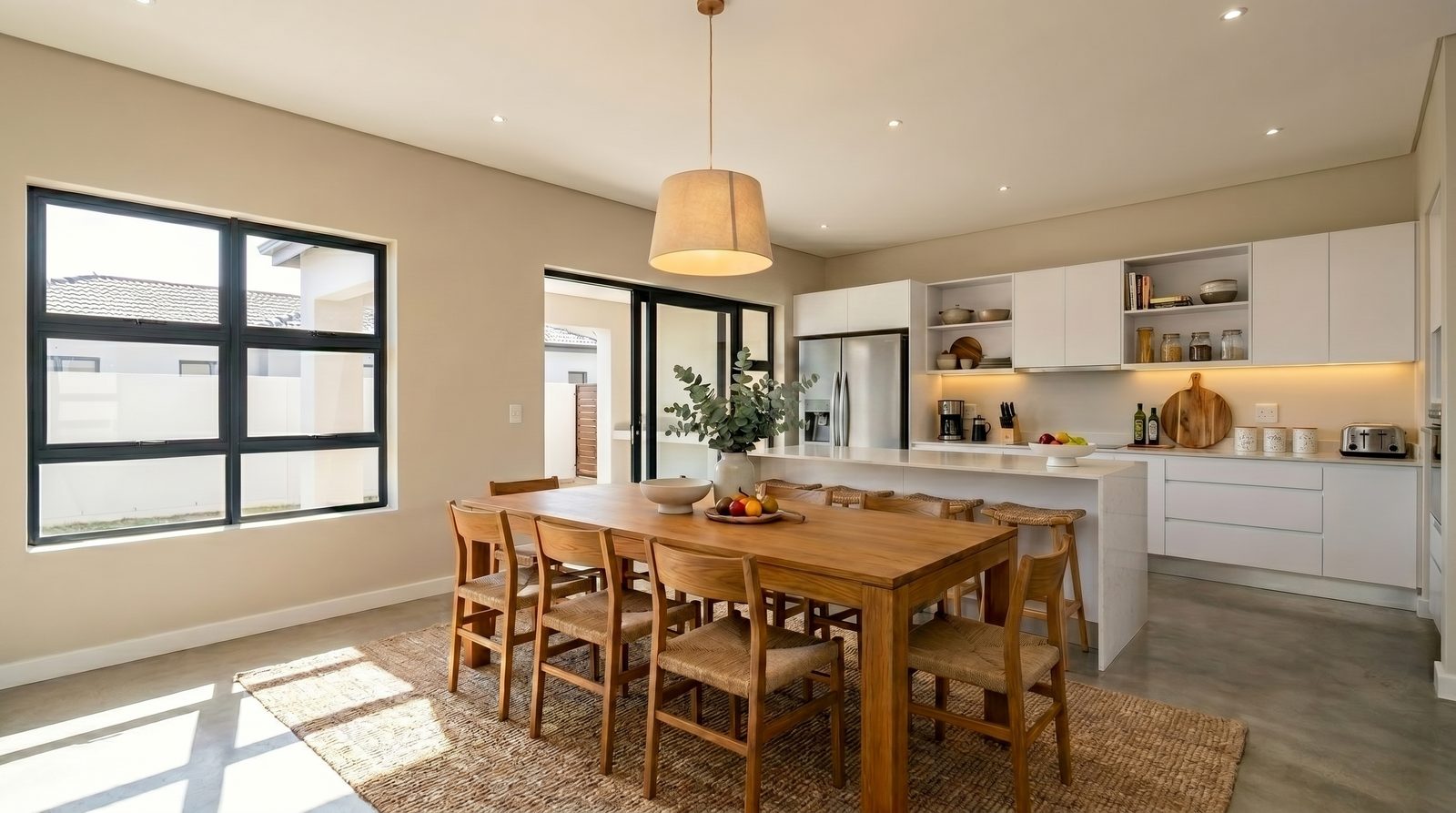
Virtual staging is the digital furnishing of a property photo. You take a clean photo of an empty (or sparsely furnished) room, and software adds realistic furniture, rugs, art, lighting and décor so the space looks like a home someone already lives in. The walls, windows, floor, ceiling and proportions of the real room stay exactly as they are, only removable furnishings are added.
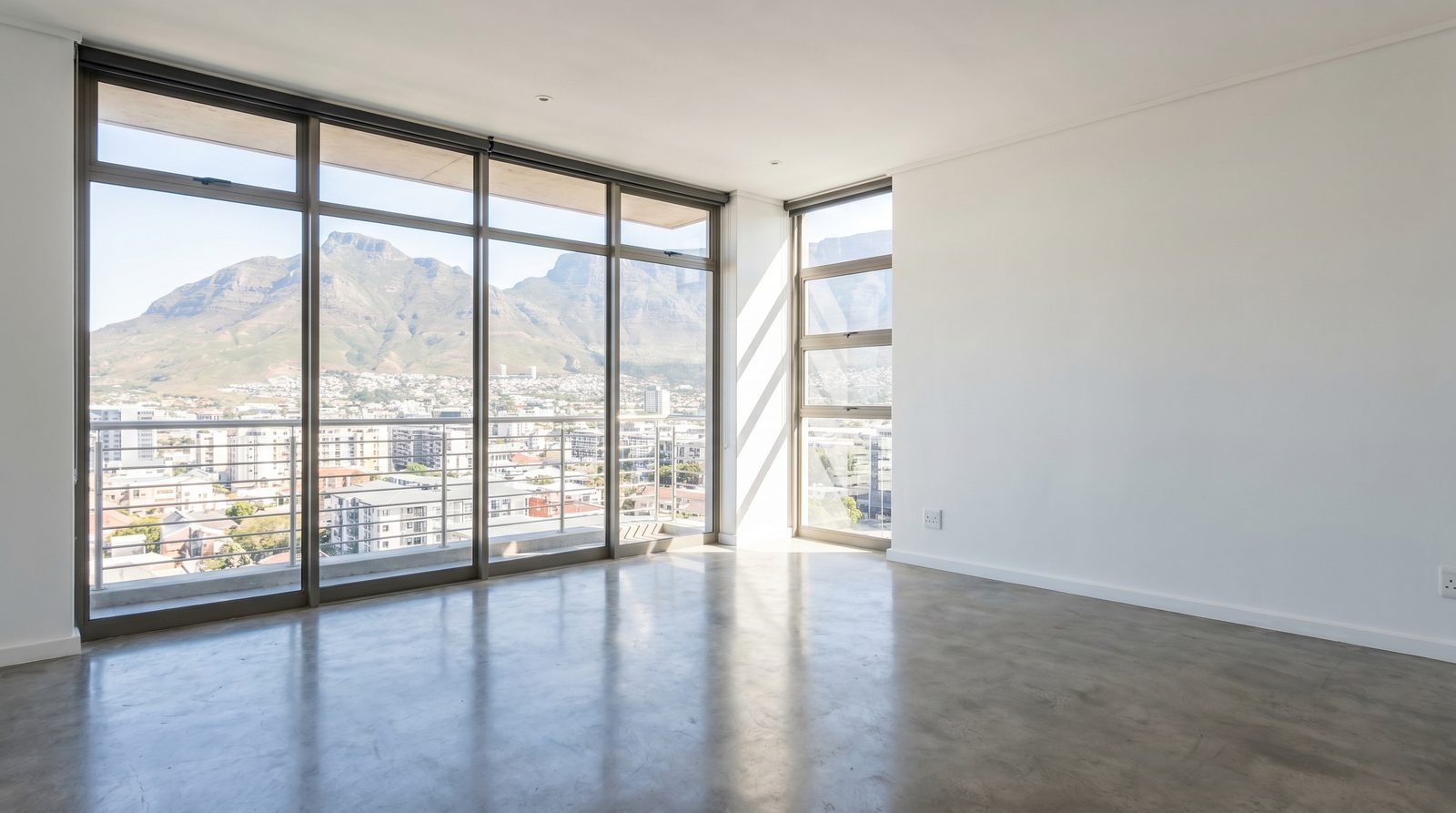 Before · empty
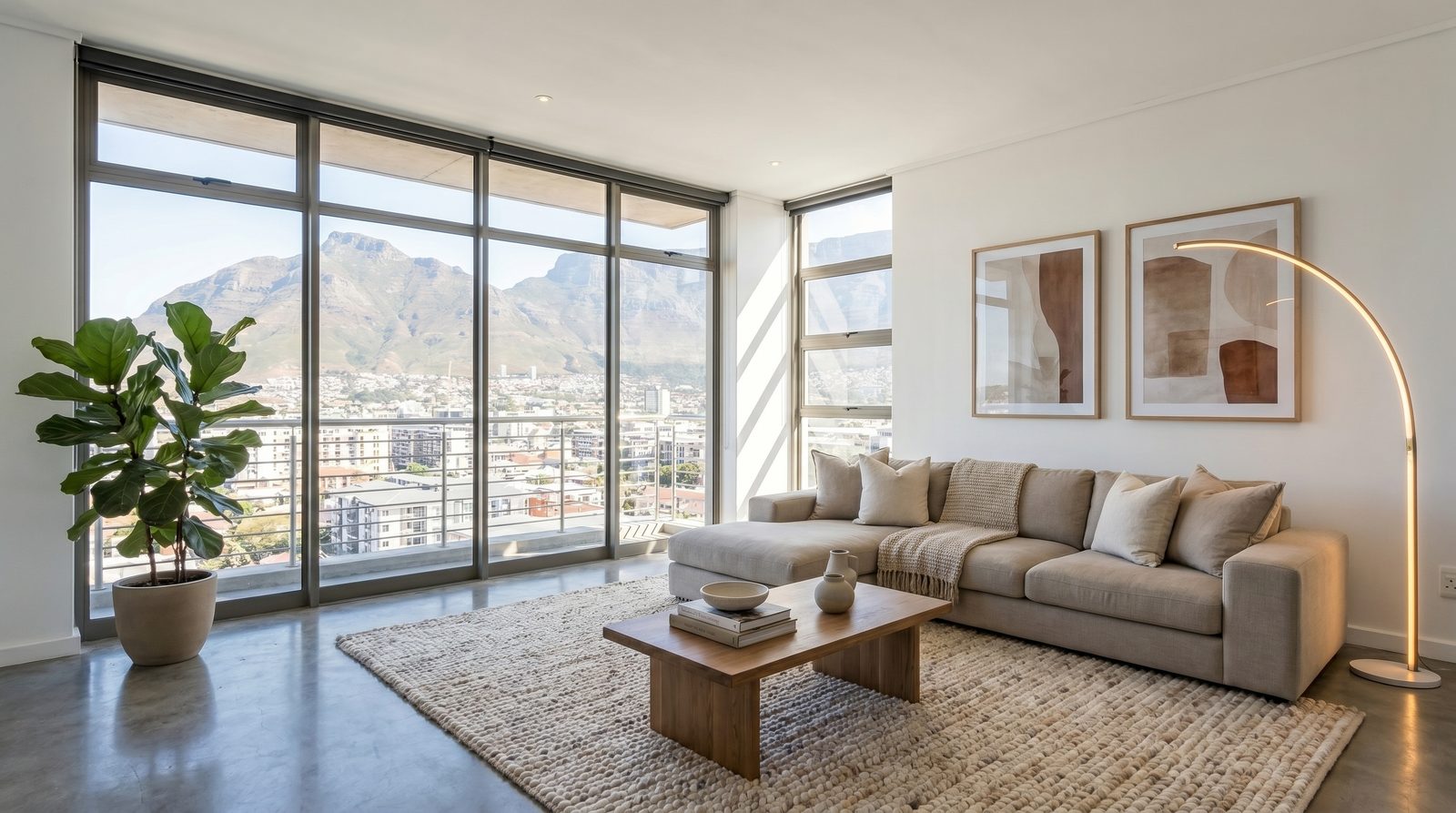 After · staged
It helps to be clear about what virtual staging is not. It is not physical staging (renting and placing real furniture in the home). It is not a video tour (a moving walkthrough of the property). And it is not photo editing in the sense of fixing exposure or straightening walls. It is one specific thing: adding believable furniture to a still photo of a real, unchanged room.
How AI virtual staging works
Traditional virtual staging is done by a digital artist who manually drops 3D furniture models into your photo and matches the lighting and perspective by hand, accurate, but slow and priced per image. The newer route is AI virtual staging: you upload a photo, choose a style, and a model trained on millions of interiors furnishes the room in minutes. The best AI tools now match perspective and lighting convincingly enough that the result is indistinguishable from a hand-staged image for a fraction of the cost. That speed and price is what has moved virtual staging from a luxury into a default for empty listings.
2. Does it actually work? The honest case
The argument for staging, physical or virtual, rests on a simple truth: buyers shop with their eyes, and almost all of them start online. An empty room forces a buyer to imagine furniture, scale and flow. Most won't bother; they'll swipe on. A staged room does that imaginative work for them, so they linger, picture their life there, and request the viewing.
1-5%
typical sale-price uplift attributed to staging*
81%
of agents say staging helps buyers visualise a home*
95%+
of buyers start their property search online
*These are widely cited industry figures (the staging numbers trace back to surveys by the US National Association of Realtors). Treat them as directional rather than gospel, they are not South-Africa-specific and your mileage will vary by suburb, price band and property. The direction, though, is consistent across every study: a furnished, well-presented listing attracts more views and enquiries than an empty one, and it sells faster and closer to asking. Virtual staging captures most of that upside at a fraction of the cost of doing it physically.
There is also a hierarchy worth naming. Photos get a buyer to stop scrolling. Staging gets them to picture themselves in the home. A video tour gets them to commit and pre-qualifies the serious ones before they ever request a viewing. Virtual staging sits in the middle of that funnel, and the photos and tour you build around it only get stronger when the rooms look lived-in.
3. Virtual vs physical staging vs leaving it empty
There is no single right answer, each approach trades cost and speed against in-person impact. Here is how they compare for a typical South African listing.
| Leave it empty | Virtual staging | Physical staging | |
|---|---|---|---|
| Typical cost | R0 | A few hundred to ~R1,500 per image (less with AI) | ~R18,000 to R90,000+ for a home |
| Turnaround | Immediate | Minutes to a few days | Days to weeks |
| Online impact | Weak, rooms read cold and small | Strong, listing looks lived-in | Strong |
| In-person (viewing) impact | None | None, furniture isn't real | Strong, buyer feels the space |
| Best for | Nothing, really | Empty homes, off-plan, tight budgets, speed | Show houses and high-end homes |
The practical takeaway: virtual staging wins the online battle, where the buyer decides whether to enquire, at a tiny fraction of the cost. Physical staging wins the in-person battle at the viewing. Many sellers use virtual staging for the listing photos and add light physical styling (fresh flowers, a few key pieces) for the actual viewings. Leaving an empty home completely unstaged online is the only genuinely weak option.
4. What virtual staging costs in South Africa (2026)
Pricing varies widely by provider, quality and turnaround, so treat every figure here as a market range rather than a quote. Broadly, there are three tiers.
| Option | Indicative cost | What you get |
|---|---|---|
| AI self-service tools | Lowest, often a small per-image or subscription fee | Fast, automated furnishing. Quality is now high; you do the work yourself. |
| Per-image staging service | A few hundred rand to ~R1,500+ per photo | A designer or AI pipeline stages each photo to brief, usually with a revision. |
| Off-plan / render furnishing | Often quoted per room or per unit | Furnishing of architectural renders for developments still to be built. |
Two things drive the price: quality and complexity. A simple lounge with good light and a clean wide shot is cheap to stage; a tricky room, a specific high-end style, or several revision rounds costs more. Against the alternative, physical staging at roughly R18,000 to R90,000 or more for a whole home, virtual staging is dramatically cheaper, which is exactly why it has become the default for empty listings rather than a premium add-on.
5. The honesty line: disclosure and the rules
This is the section every other South African article on virtual staging skips, and it is the most important one. Virtual staging is a marketing tool, and South African estate agents are bound by clear duties about how they market. Under the Property Practitioners Act and the PPRA (Property Practitioners Regulatory Authority) code of conduct, a property practitioner must not market a property in a way that is false, misleading or deceptive. Virtual staging is completely compatible with that duty, as long as you use it to show potential, not to fake reality.
The safest and most professional position is simple: disclose it. A buyer should never feel tricked when they arrive at a viewing and the furniture is gone. Disclosure costs you nothing, protects you if a deal is ever questioned, and is increasingly what buyers and portals expect.
A few practical norms have settled in around staged images:
- Label staged photos so they are not confused with real, current photos of the property.
- Keep at least one honest, unstaged photo of each major room in the set, so buyers can see the real space too.
- Never stage over a defect, a damp patch, a crack or anything you would otherwise have to disclose.
- On the major portals (Property24, Private Property), follow their listing rules on edited and illustrative images, when in doubt, label it.
None of this is legal advice, it is general guidance. If you are unsure how a specific listing should be handled, check with your principal or the PPRA. But the underlying rule is easy to remember and never gets you into trouble: be honest about what is real and what is shown for illustration.
6. What you can and can't (ethically) do
The line between fair staging and misrepresentation is clearer than people think. The test is whether your edit changes what the buyer is actually buying. Adding removable furniture does not. Changing the property does.
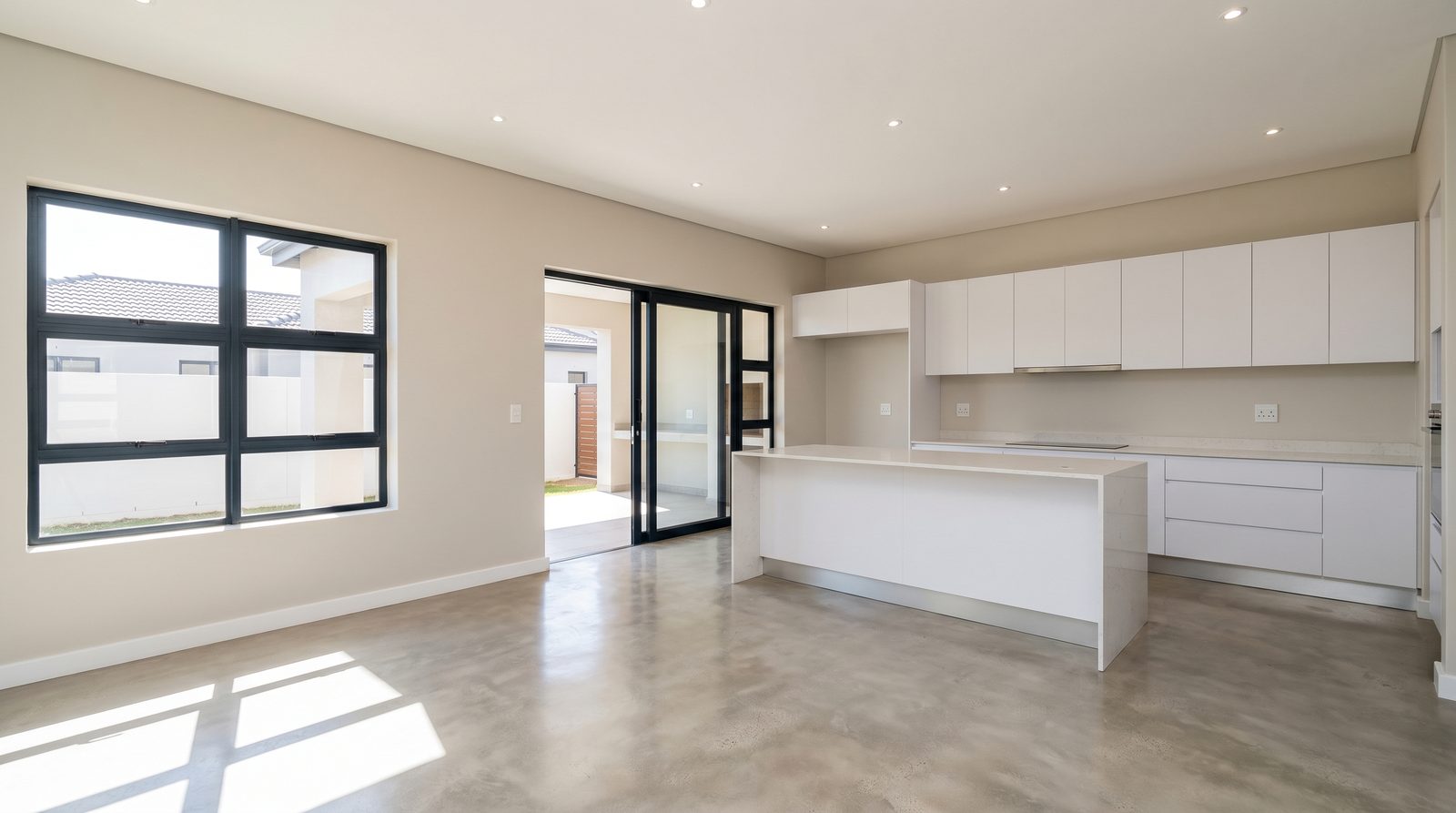 Before · empty
 After · staged
Use this as your rulebook:
- Fair game: adding sofas, beds, dining sets, rugs, art, plants and lamps; tidying or removing clutter; replacing a flat grey sky on an exterior; balancing exposure so the room looks its true brightness.
- Over the line: removing or moving walls; changing a room's size, shape or layout; deleting or hiding damp, cracks, mould or damage; inventing a view that isn't there; adding or removing permanent fixtures; making a small room look materially bigger than it is.
7. Get photos that stage well
Virtual staging is only as good as the photo you feed it. A dark, crooked, cluttered shot produces a dark, crooked, awkwardly furnished result, AI or human. Before you stage anything, get the input right.
- Shoot in bright, even daylight with every light on, so the room is its true brightness (in South Africa, north-facing rooms get the most sun, plan around it).
- Plan the shoot around the load-shedding schedule so the lights are actually on in the frame.
- Keep verticals straight and shoot from a corner at about chest height, so the staged furniture sits naturally in the space.
- Clear the room completely, leftover clutter confuses the staging and looks odd next to digital furniture.
- Use a wide-but-honest lens; avoid fisheye distortion that the furniture can't follow.
For the full method, gear, camera settings, lighting and editing, read our companion guide: How to do real estate photography in South Africa. Nail those fundamentals first and everything downstream, including the staging and any video tour, gets easier.
8. Room by room: which rooms to stage and how
You don't need to stage every room, and you shouldn't stage them all the same way. Prioritise the spaces that sell the home and the ones that look worst empty.
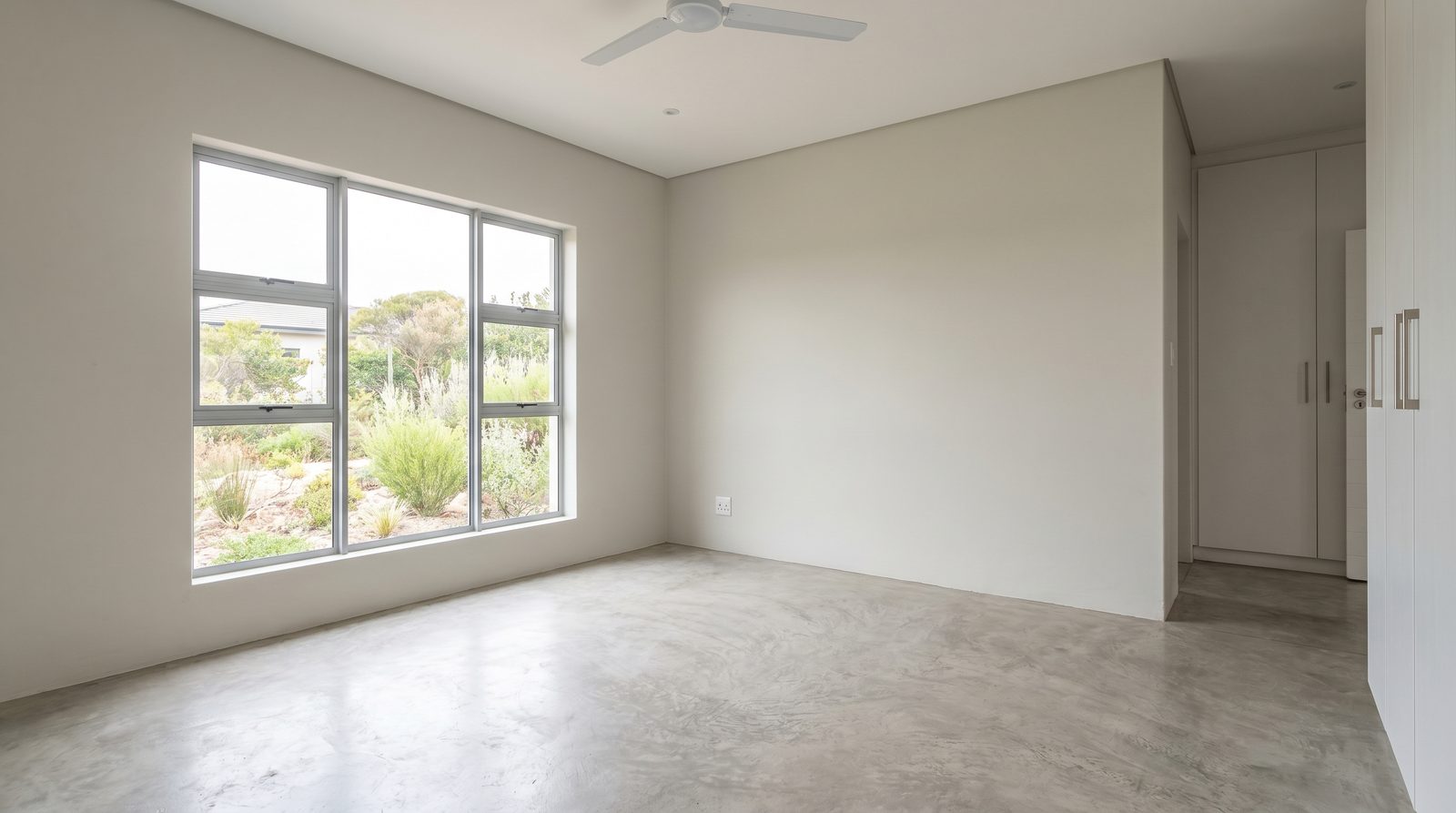 Before · empty
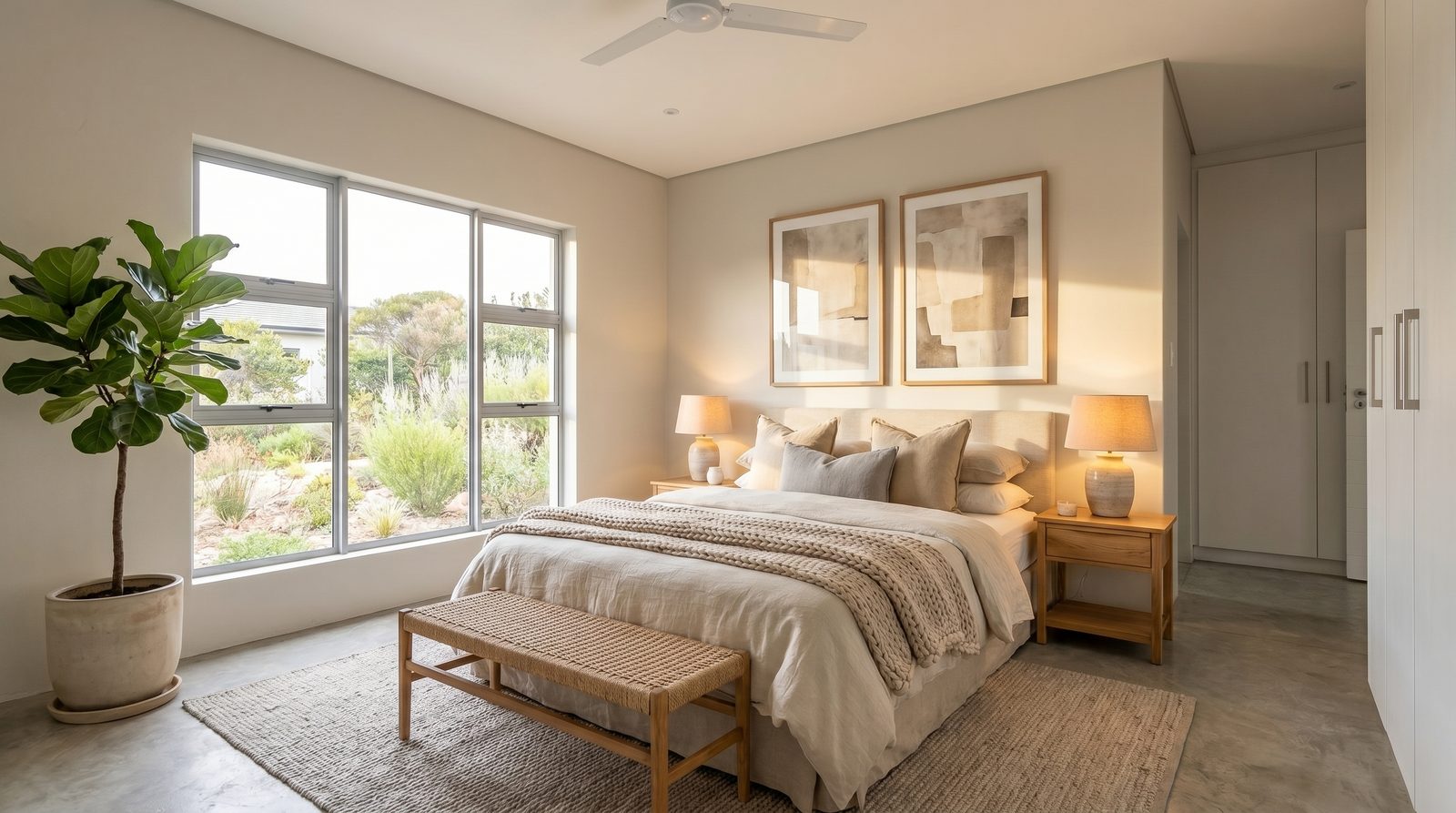 After · staged
- Living / lounge: the most important room to stage, it sets the emotional tone. A sofa, coffee table, rug, art and a plant make it feel like home.
- Main bedroom: stage it to feel restful and aspirational, bed with neutral linen, side tables, lamps, soft art. Skip the clutter.
- Dining / open-plan: show the flow. A right-sized table proves the space works for entertaining.
- Kitchen: usually don't add furniture, instead keep counters clean and let one or two styled details (a bowl, a board) warm it up.
- Spare room: stage it as the thing buyers want, a home office or nursery, to show the room's purpose.
- Patio / braai area: a table and chairs out here sells the South African outdoor-living dream more than almost anything inside.
9. Choosing a style that sells South African buyers
The goal of staging is to appeal to the widest pool of serious buyers, not to show off a bold taste. That means a warm-neutral base, soft greys, warm whites, natural timber and a few greenery accents, that lets buyers project their own style onto the space. Restraint sells; a polarising palette narrows your buyer pool.
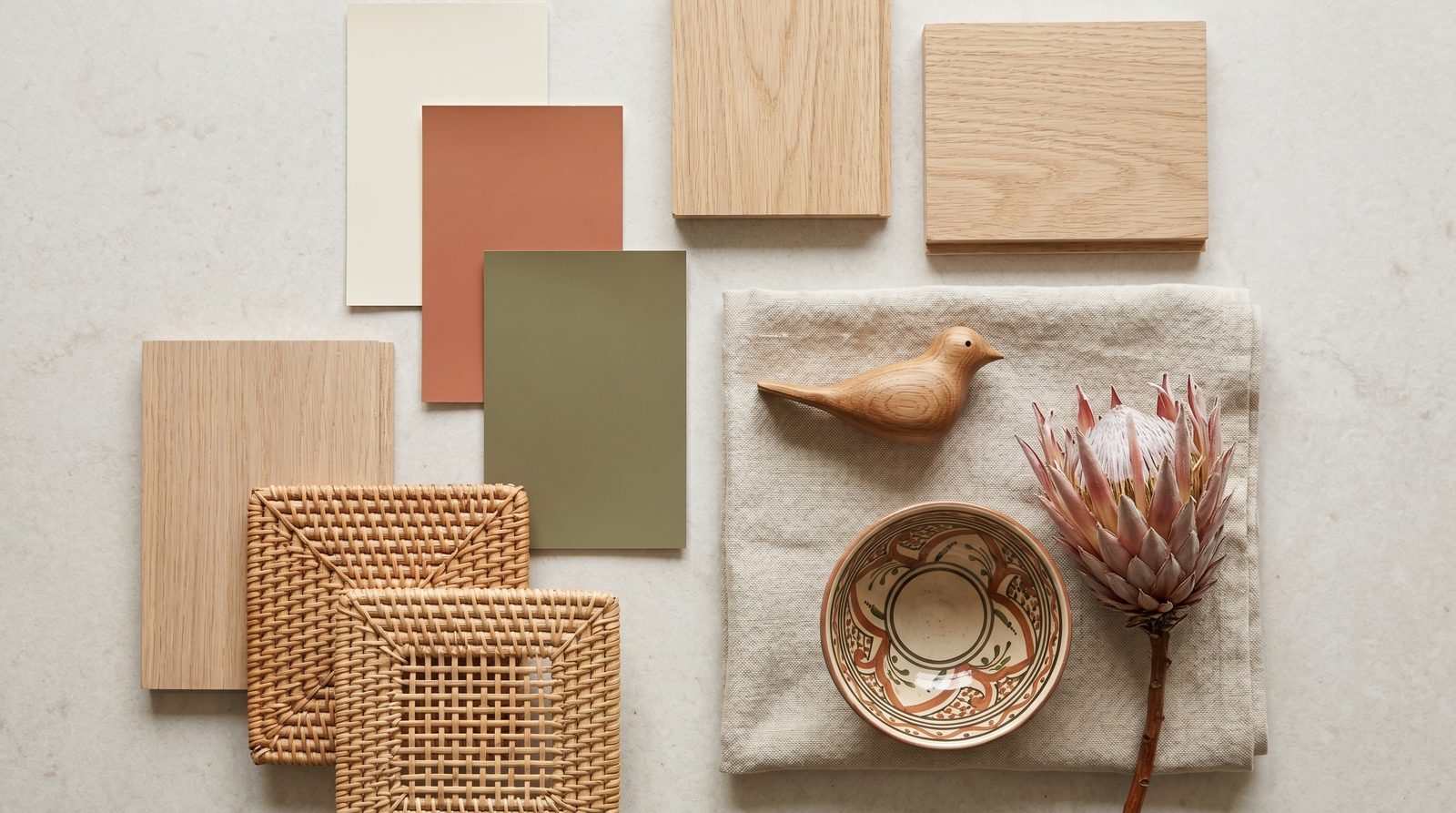
A few South African nuances are worth respecting. Coastal listings (Cape Town, the KZN coast) suit lighter, airier, more relaxed styling; Highveld and bushveld homes can carry slightly warmer, earthier tones. Whatever you choose, the single most important rule is consistency: every staged photo in one listing must use the same style and palette. A lounge styled modern-minimalist next to a bedroom styled farmhouse-rustic looks disjointed and erodes trust. Pick one direction and hold it across the whole set.
10. Off-plan and new developments
Virtual staging's single strongest use case is off-plan, because the buyer literally cannot walk a home that has not been built. All they have is a price, a plan and a grey architectural render. Furnishing those renders turns an abstract shell into a warm, finished space a buyer can imagine living in, and that emotional leap is what closes off-plan sales.
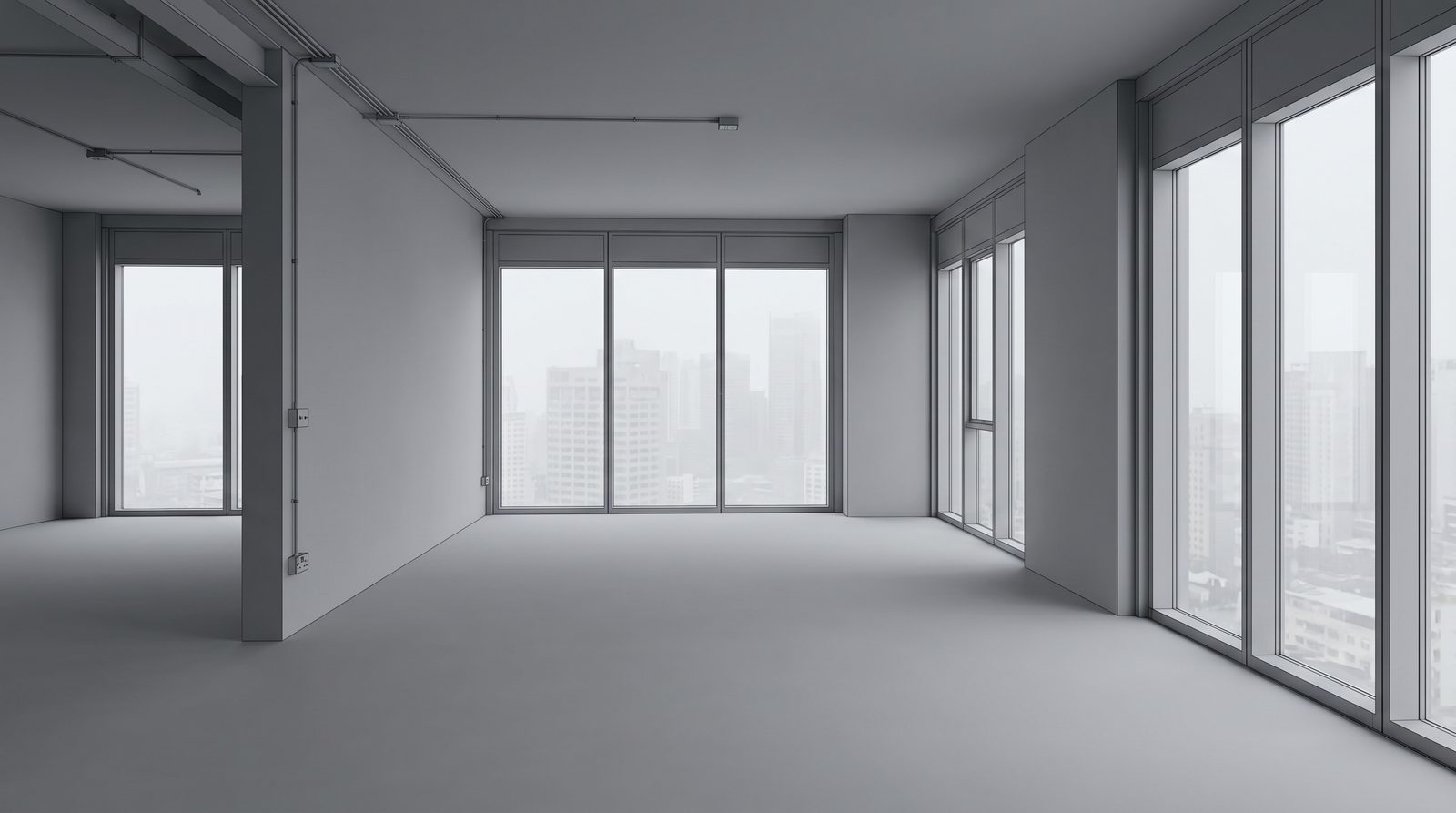 Before · render
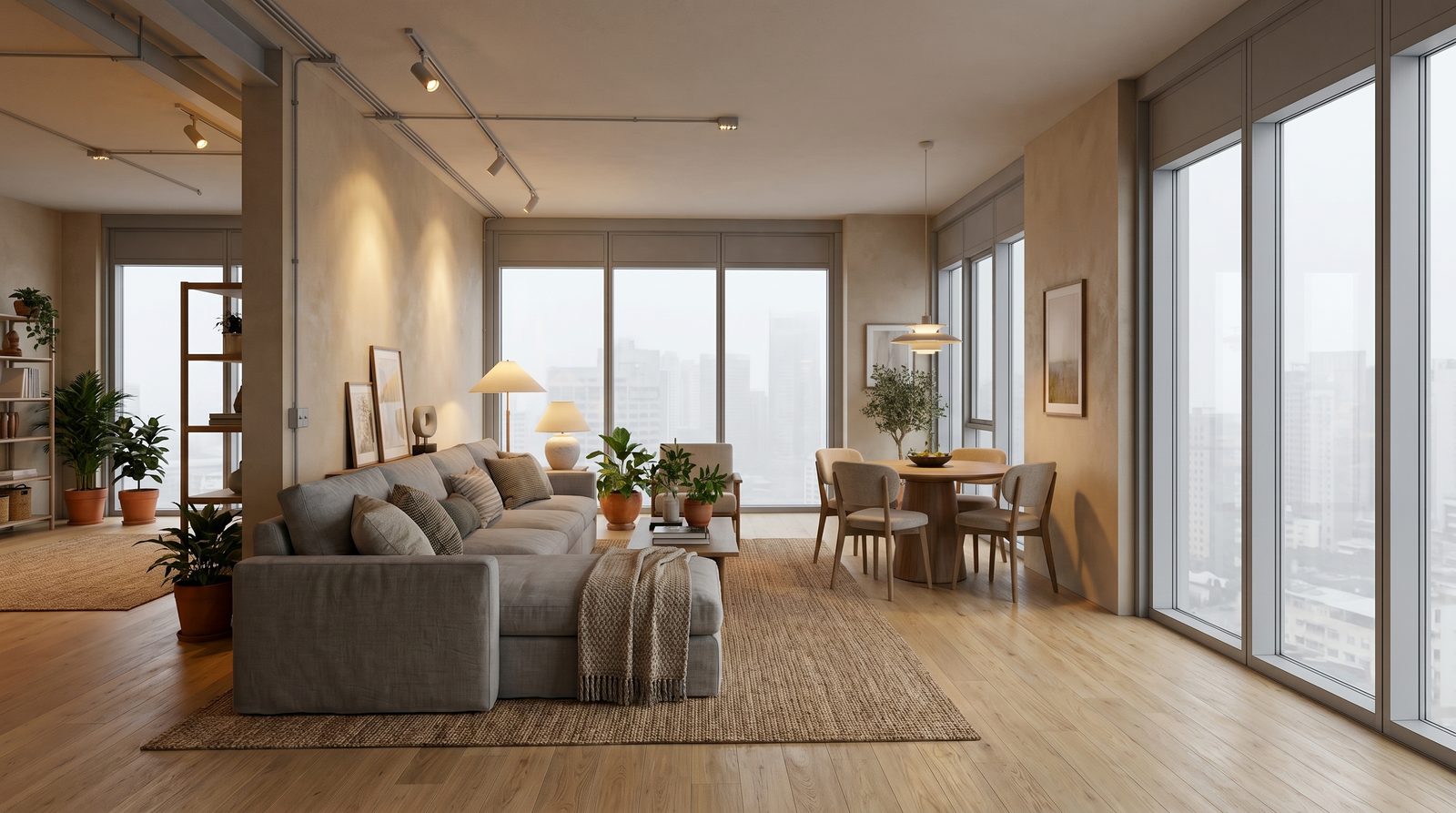 After · furnished
For developers the maths is compelling: you can stage one unit in several styles, or stage every unit type across a whole development, far cheaper and faster than building physical show units for each. But off-plan also carries the highest disclosure duty of all, precisely because nothing physical exists to check the image against. Always label these images clearly as illustrative renders of a property still to be built, and make sure finishes shown match what will actually be delivered.
11. DIY / AI staging vs a designer, and how RealTours does it
You have two routes. Hire a virtual staging service and brief them per image, more hands-off, more expensive, with a human catching mistakes. Or use an AI tool and stage it yourself, faster, far cheaper, and improving constantly, but you own the quality check. For most agents on most listings, a good AI tool plus a careful eye is now the best value: you get same-day, consistent results without per-image designer fees, as long as you reject anything that looks fake before it goes live.
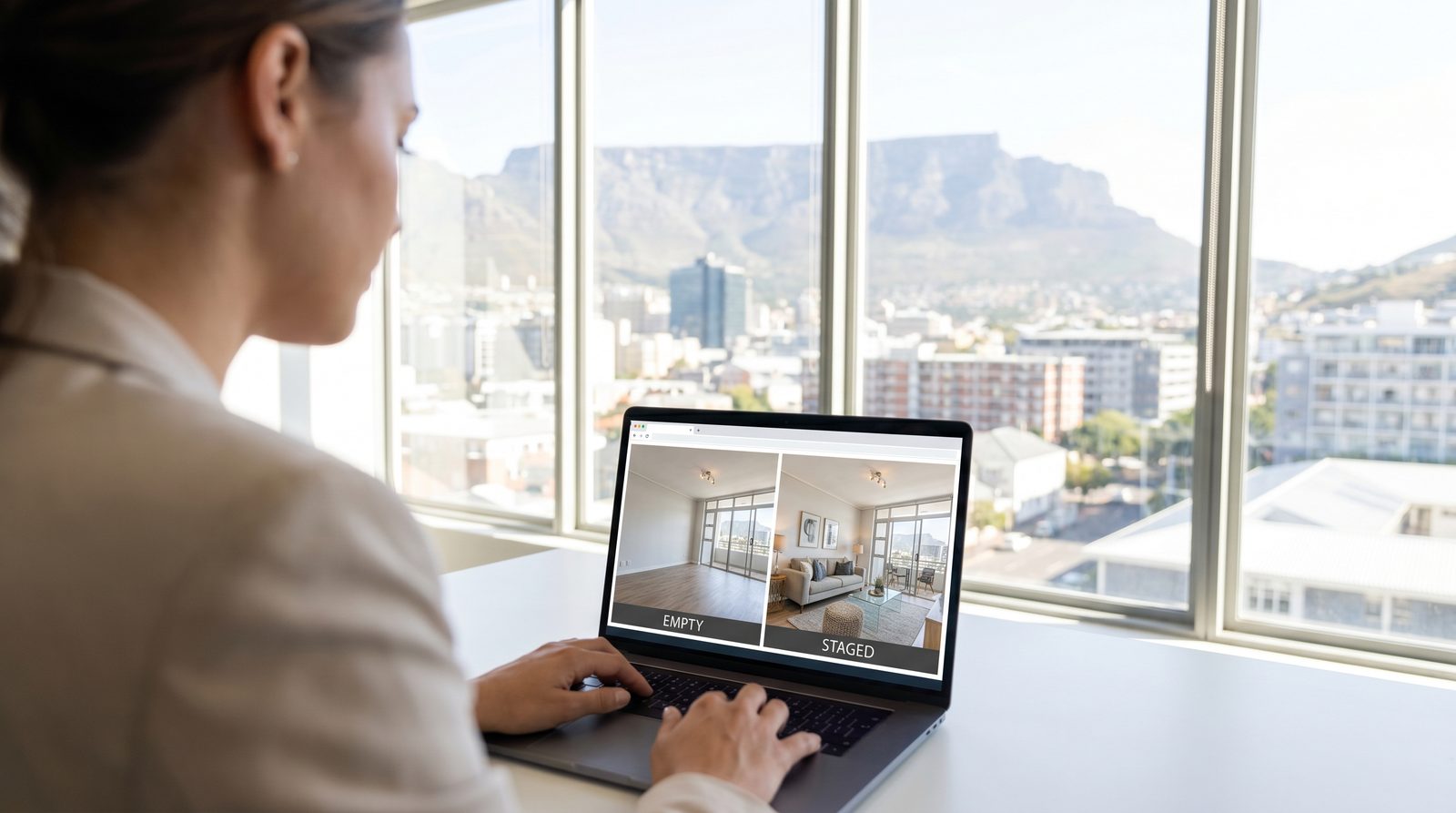
This is exactly what we built RealTours Image Lab to do. You upload a photo of an empty room and get a professionally staged image back the same day, in a consistent style across the whole listing. And because RealTours is also a video-tour platform, you can take the same set of photos and turn them into a cinematic, narrated walkthrough, a landscape version for Property24 and YouTube and a portrait version for WhatsApp and social, without any extra shoot. Photos, staging and a tour from one upload. You can see real examples, check the pricing, or start a listing now.
12. Common mistakes and a pre-publish checklist
Most bad virtual staging fails for the same handful of reasons. The biggest tell is furniture that doesn't obey the room, wrong scale, floating off the floor, lighting that doesn't match the windows.
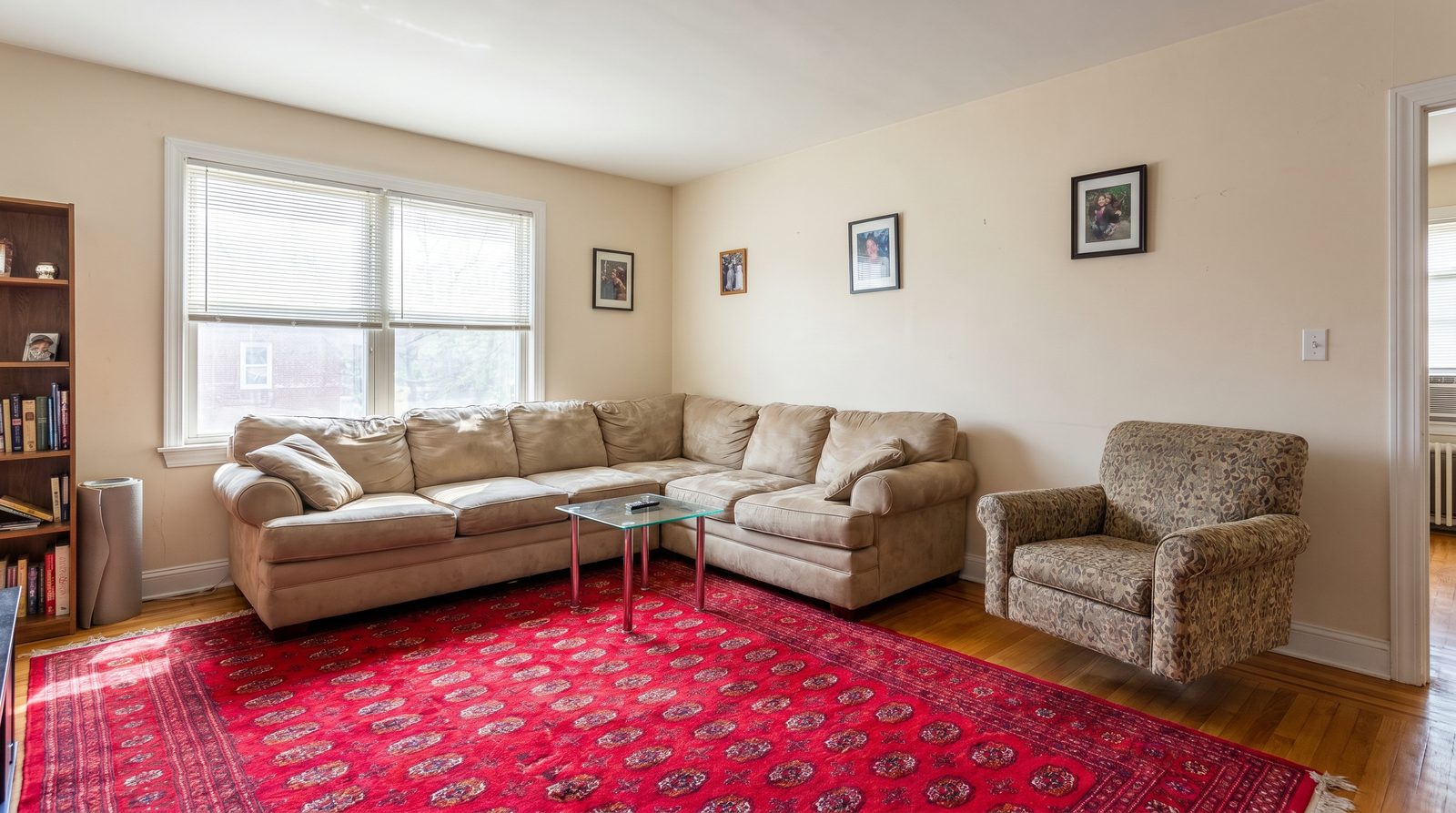
- Unrealistic renders, furniture that's too big or too small, casts no shadow, or floats above the floor.
- Over-styling, bold, polarising colours and clutter that distract instead of sell.
- No disclosure, staged photos passed off as real, setting up a let-down at the viewing.
- Inconsistent style, a different look in every room of the same listing.
- Staging over problems, hiding a defect instead of furnishing an honest space.
- Bad input photos, dark, crooked or cluttered shots that no staging can rescue.
Get the fundamentals right, honest staging, realistic furniture, a consistent style and clear disclosure, and your empty listings will stop reading as empty and start booking viewings. Add a video tour on top, and you're not just keeping up with the South African market. You're setting the standard for it.
Sources & further reading